


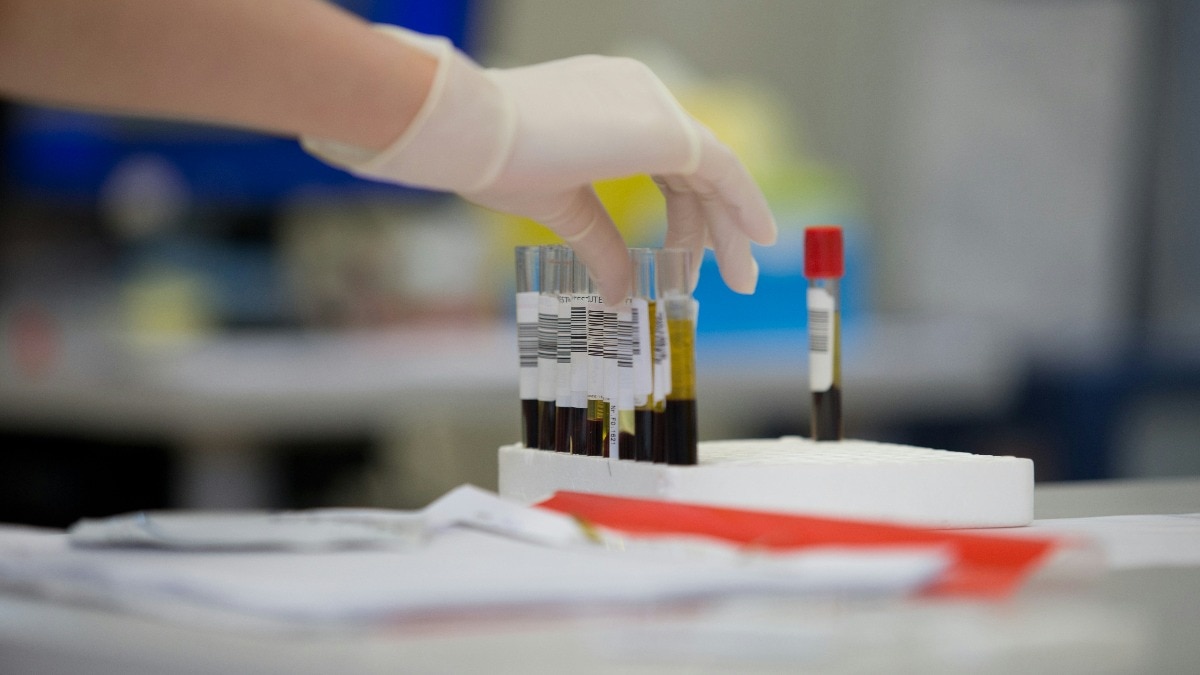
A new blood test introduced in India could make detecting Alzheimer’s disease faster, simpler, and far less invasive.
This comes at a time when Alzheimer’s disease is increasing in the country and the diagnosis is made when symptoms have already progressed.
Alzheimer’s, a type of dementia, involves the dying of brain cells in a gradual phase, leading to memory loss, cognitive decline, and several behavioural changes because of abnormal protein build-up.
Metropolis Healthcare, a leading diagnostic company, has launched a plasma-based screening test that identifies key biomarkers linked to Alzheimer’s. Thus, allowing doctors to detect changes in the brain through a routine blood sample rather than more complex procedures.
MOVING AWAY FROM INVASIVE TESTING
Until now, confirming Alzheimer’s has relied on a combination of clinical symptoms, brain imaging, and cerebrospinal fluid (CSF) testing.
CSF analysis requires a spinal tap, a procedure where fluid is drawn from the spine, which can be uncomfortable and not easily accessible for many patients.
“This used to be a CSF-based test, which requires a spinal puncture to collect spinal fluid,” said Dr. Kirti Chadha, Chief Scientific and Innovation Officer, Metropolis Healthcare Ltd. “Now, the beauty of this test is that it’s plasma-based, it’s just a blood test. That makes it much easier, cheaper, and more accessible.”
The test fits into what doctors call the “triad” approach to diagnosis: clinical evaluation, imaging such as PET scans or MRI, and biomarker confirmation. The new blood test simplifies the last step.
DETECTING THE DISEASE EVEN BEFORE SYMPTOMS
The test works by measuring biomarkers such as amyloid and tau proteins – substances that build up in the brain and form plaques, a hallmark of Alzheimer’s.
What makes this development particularly important is its ability to pick up early, even silent, changes.
“Very interestingly, this test can be positive in the preclinical phase. If someone has a family history and wants early screening, it can detect changes even when there are no symptoms yet,” Dr. Chadha explained.
This means people at higher risk could be monitored earlier, potentially allowing for timely intervention and better disease management.
The test’s reliability is supported by clinical data referenced by the US Food and Drug Administration. In the study, 91.7% of individuals who tested positive using the plasma biomarker were confirmed to have amyloid plaques through PET scans or CSF testing.
At the same time, 97.3% of those who tested negative showed no signs of amyloid pathology.
Internal evaluation by Metropolis also showed strong performance, with sensitivity of 94.4% and specificity reaching up to 100% in some datasets.
EARLY ROLLOUT AND WHAT IT MEANS FOR INDIA
The test has already been rolled out, with around 50–60 patients tested so far. According to the company, early results show strong agreement with clinical findings, and larger datasets will be shared as more patients are evaluated.
“It’s like any other chemistry blood test, with a very short turnaround time,” Dr. Chadha added.
Alzheimer’s has been heavily underdiagnosed in India, especially among people over 50, where early symptoms like mild memory loss are often dismissed as normal ageing.
A simple blood test could help change that by making screening more accessible and less intimidating.
– Ends