



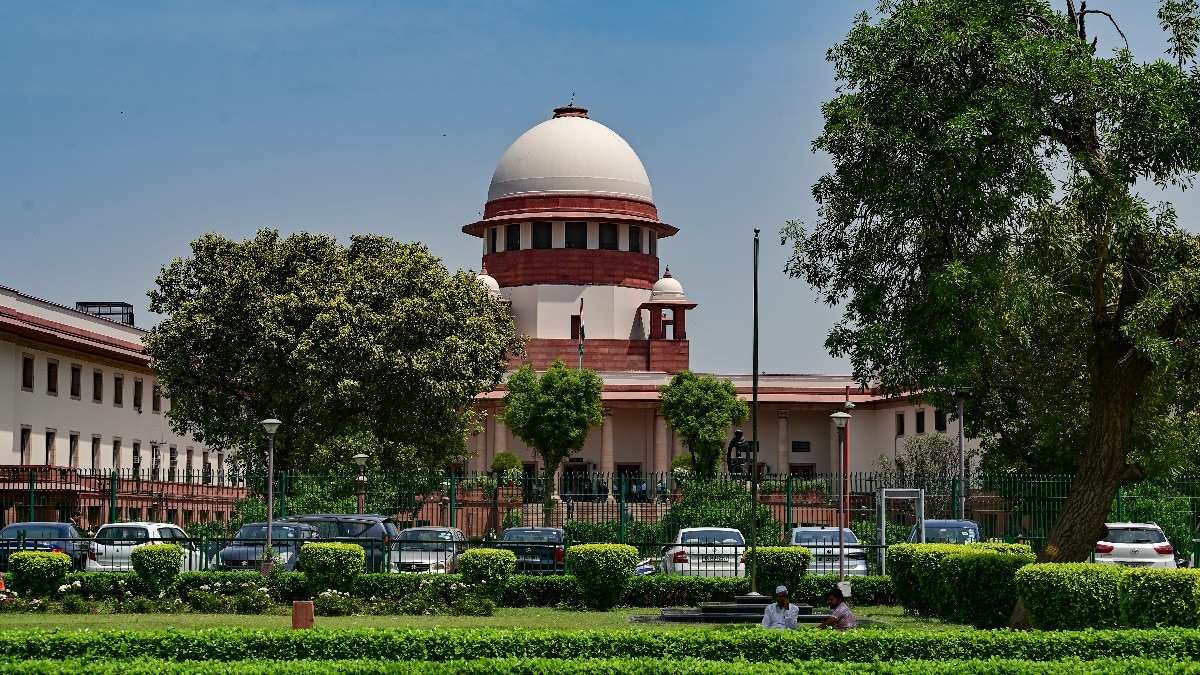
The Supreme Court on Wednesday declined the Centre’s request to defer hearings on petitions challenging the 2023 law governing the appointment of election commissioners, underlining that the issue was “more important” than other matters listed before the court.
A bench of Justices Dipankar Datta and Satish Chandra Sharma rejected Solicitor General Tushar Mehta’s plea for adjournment, which was sought on the ground that he was engaged before a nine-judge Constitution bench examining questions linked to religious freedoms, including the Sabarimala temple entry issue.
Pushing back, the bench said the challenge to the Chief Election Commissioner and Other election commissioners (Appointment, Conditions of Service and Term of Office) Act, 2023 warranted priority. Justice Datta remarked that the court must proceed, adding that associates of the law officer could take notes while petitioners begin arguments. The bench also directed petitioners to conclude their submissions by Thursday, with the Centre to respond later.
“This matter is more important than any other matter,” Justice Datta said.
“Let your (solicitor general’s) associates take notes today. Let the petitioners start. All matters are important. We read in the newspapers that there is an observation that the PIL in Sabarimala should not have been entertained by the court. So, with due respect to the judges, nine judges are occupied in a matter where there is an observation that it should not have been entertained in the first place,” he added.
During the hearing, the court asked petitioners to furnish a list of constitutional posts where the presence of the Chief Justice of India in selection panels is considered necessary to ensure fairness in appointments. Senior advocate Vijay Hansaria, appearing for petitioner and Congress leader Jaya Thakur, said details were already part of the plea but assured the court a separate compilation would be submitted before the court.
The petitions challenged the constitutional validity of the 2023 law, which removed the Chief Justice of India from the selection committee tasked with appointing the Chief Election Commissioner and other election commissioners. Under the current law, the panel comprises the Prime Minister, a Union Minister nominated by him, and the Leader of the Opposition in the Lok Sabha or the leader of the largest opposition party.
The legislation was enacted in December 2023, months after a Constitution bench of the Supreme Court ruled that such appointments should be made by a committee including the Prime Minister, the Leader of the Opposition, and the Chief Justice of India, until Parliament frames a law.
Petitioners, including Jaya Thakur and the Association for Democratic Reforms, have argued that excluding the CJI undermines the independence of the Election Commission. The Centre, however, has maintained that the body’s independence does not hinge on the presence of a judicial member in the selection process.
In earlier proceedings, the top court had declined to stay appointments made under the 2023 law. The Centre has also denied allegations that the appointment of two election commissioners in March 2024 was rushed to pre-empt judicial scrutiny.
Separately, Chief Justice Surya Kant had recused himself from hearing the matter earlier, citing a potential conflict of interest. “I will be accused of conflict of interest. There is a conflict of interest,” the CJI had said.
The hearing in the case is ongoing.
– Ends