



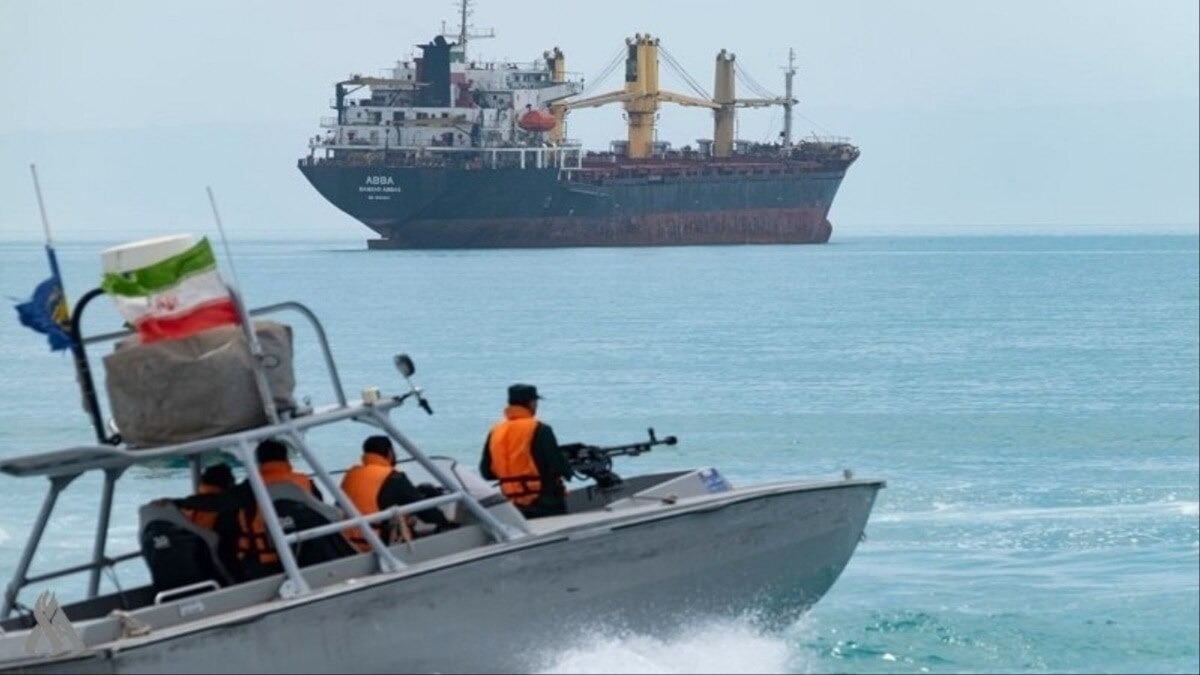
Amid ongoing conflict with the United States, Iran is no longer just blocking the Strait of Hormuz, it is trying to run it. New rules now require ships to seek permission before passing through the chokepoint, according to CNN.
Iran has set up a new body, the Persian Gulf Strait Authority (PGSA), to manage traffic through the strait. It has issued a form called “Vessel Information Declaration”, which ships must complete before transit. The form asks for details of vessel identity, ownership, crew nationalities and cargo. Ships are required to submit the information in advance.
The document, cited by CNN, warns that “complete and accurate information is essential” and adds that “any incorrect or incomplete information provided will be the sole responsibility of the applicant, and any resulting consequences will be borne accordingly”.
Iran was reportedly already asking for similar details informally, but the new system is set to formalise the process.
US, IRAN STANDOFF OVER HORMUZ ACCESS
The Strait of Hormuz carries about a fifth of the world’s oil and gas supplies, making it one of the most important shipping routes globally. Before the conflict began on February 28, ships from all countries could pass without restrictions. Since then, Iran has warned that vessels without approval from its forces risk being targeted.
Many ships, including Indian vessels, have already come under attack, forcing operators to avoid the route. As a result, traffic through the strait has dropped sharply, which has propelled fuel costs higher in recent weeks.
Iran has said ships linked to the US or Israel would not be allowed to pass through the waterway, while others would need its approval. India, Pakistan and China have already negotiated with Tehran to ensure safe passage for several vessels. The Islamic Revolutionary Guard Corps (IRGC) has also been using emergency radio signals to warn ships that it controls movement through the waterway.
The blockade was first imposed by Iran following US-Israeli strikes. In response to Iran’s control of the strait and the failure of ceasefire negotiations, Trump announced a counter-blockade. Since then, the US has made several claims of transiting vessels through the strait, to which, Iran denied and even fired upon them.
Iran’s leadership has made it clear that control over the strait is part of a comprehensive strategy. Supreme Leader Mojtaba Khamenei has called for a “new regional and global order under the strategy of a strong Iran”.
“Foreigners who come from thousands of kilometres away, acting maliciously out of greed, have no place there, except at the bottom of its waters,” a statement attributed to him said.
The Donald Trump administration has opposed Iran’s initiative, saying any attempt to control or charge for transit through the strait would violate international law.
“There are reports that Iran is charging fees to tankers going through the Hormuz Strait. They better not be and, if they are, they better stop now,” Trump said earlier in April.
TALKS FOCUS ON SHORT-TERM TRUCE
Meanwhile, US and Iran are now testing a narrow path for a short-term peace deal. Instead of trying to settle every dispute, both sides are now tring on stop the conflict first, while disagreements over Iran’s nuclear programme are still unresolved.
According to news agency Reuters, both sides would move into a 30-day period of talks for a comprehensive deal. Pakistani officials involved in mediation are also expressing optimism — but whether this window can translate into a long-term agreement remains uncertain.
– Ends