

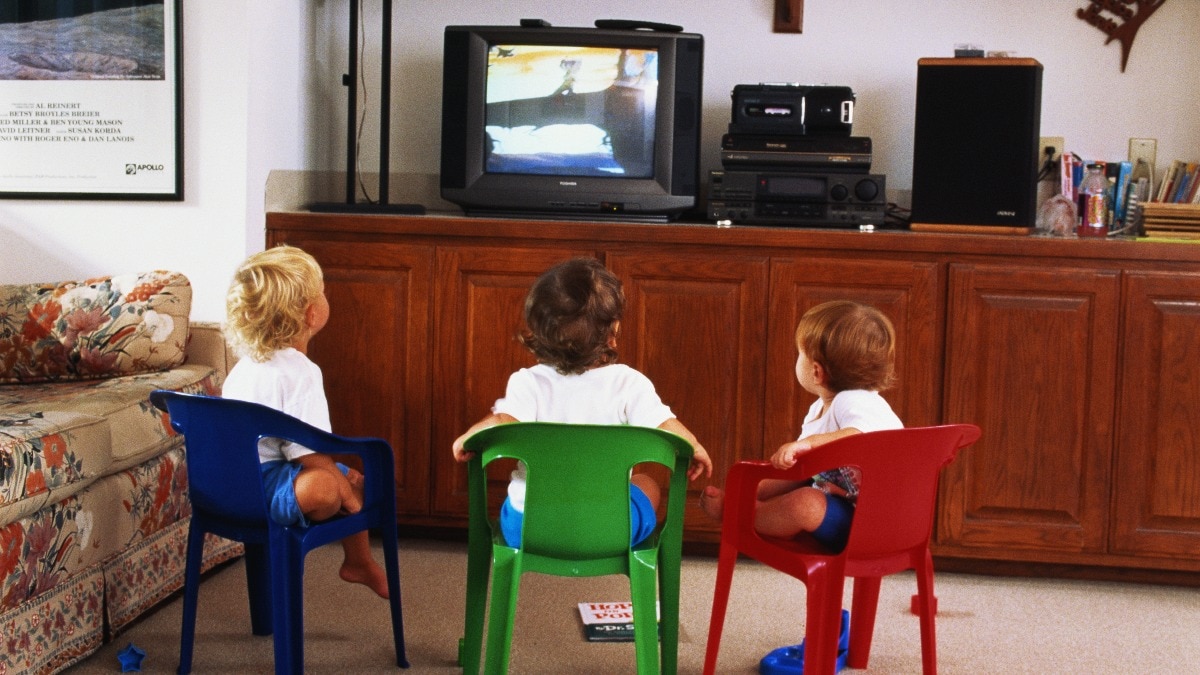
In homes across India, screens have quietly become a part of infancy, used to calm a crying baby, distract during meals, or fill long afternoons. But new findings from All India Institute of Medical Sciences Delhi suggest this early digital exposure could come at a cost.
A study by its paediatric neurology team has found that children exposed to higher screen time before the age of one were more likely to show signs of autism by the age of three. The findings by the researchers revealed that children under 18 months should ideally not be exposed to screens at all.
WHAT DID THE AIIMS STUDY REVEAL?
The concern lands at a time when autism diagnoses are steadily climbing. According to the US Centers for Disease Control and Prevention (CDC), about 1 in 31 children are now diagnosed with autism. The World Health Organisation places the global estimate at around 1 in 100.
Behind these numbers are real families navigating a condition that shapes how a child connects with the world.
At AIIMS, more than 2,000 children with autism have been evaluated, and nearly 80% of them were found to have additional challenges, ranging from epilepsy and attention difficulties to sleep and behavioural issues. These layers make everyday life harder not just for the child, but for caregivers as well.
Explaining what autism looks like, Dr. Shefali Gulati, Faculty In-Charge of Child Neurology Division in the Department of Paediatrics, AIIMS, said, “Autism spectrum disorder is a neurodevelopmental condition that affects social interaction and communication. It begins early in life, sometimes within the first year. A key feature is repetitive behaviours and restricted interests. For example, a child may repeatedly flap their hands or walk on their toes. These actions are not connected to context and are seen as repetitive patterns.”
She added that children with autism can engage with the world differently: “Children with autism may also focus intensely on specific parts of a toy rather than playing with it in a typical way. The term ‘spectrum’ is important, it means every child is different. Not all children show the same signs, and the severity also varies widely.”
WHY EARLY YEARS MATTER
The link with screen time, the study says, is not about a single cause but about what screens replace. Early childhood is built on eye contact, back-and-forth sounds, gestures, and play—tiny interactions that help wire the brain.
“Screen time is another factor. Studies show that children exposed to higher screen time at an early age are more likely to show autism-related features later. Research from AIIMS also found that children with autism had earlier and longer exposure to screens,” Dr. Gulati said.
The timing matters. The first few years of life, especially the first 1,000 days, are when the brain develops at its fastest pace.
“Early identification is crucial. The first 1,000 days of a child’s life, from pregnancy to the first three years, are critical for brain development. If autism is identified early, intervention can begin sooner, leading to better outcomes. After the age of three, patterns in the brain become more fixed, making change harder,” she explained.
She urged parents to watch for early signs such as lack of eye contact, not responding to their name, delayed speech, or losing skills a child had already learned. These signs, when seen consistently, need attention.
Autism does not have a single cause. Genetics, environment, and lifestyle all play a role.
“The causes of autism are complex and include genetic, environmental, and lifestyle factors,” Dr. Gulati noted.
She also addressed a concern that continues to surface in public conversations: “There is no evidence linking vaccines to autism, and this has been clearly proven through global data.”
For many parents, screens feel like an easy solution in a demanding routine. But this study adds to a growing body of evidence that the earliest years need something far simpler, and far more powerful, than a screen: human connection.
As autism cases rise, the focus, must stay on early recognition, timely support, and small everyday choices that shape how a child’s brain grows.
– Ends