






In hindsight, the Directorate General of Civil Aviation (DGCA) got it right in January. The aviation regulator had banned in-flight charging beginning that month after a power bank caught fire on a Delhi-Dimapur IndiGo flight in October 2025.
Power banks shall remain inside carry-on luggage and must not be placed in overhead compartments, the DGCA had directed.
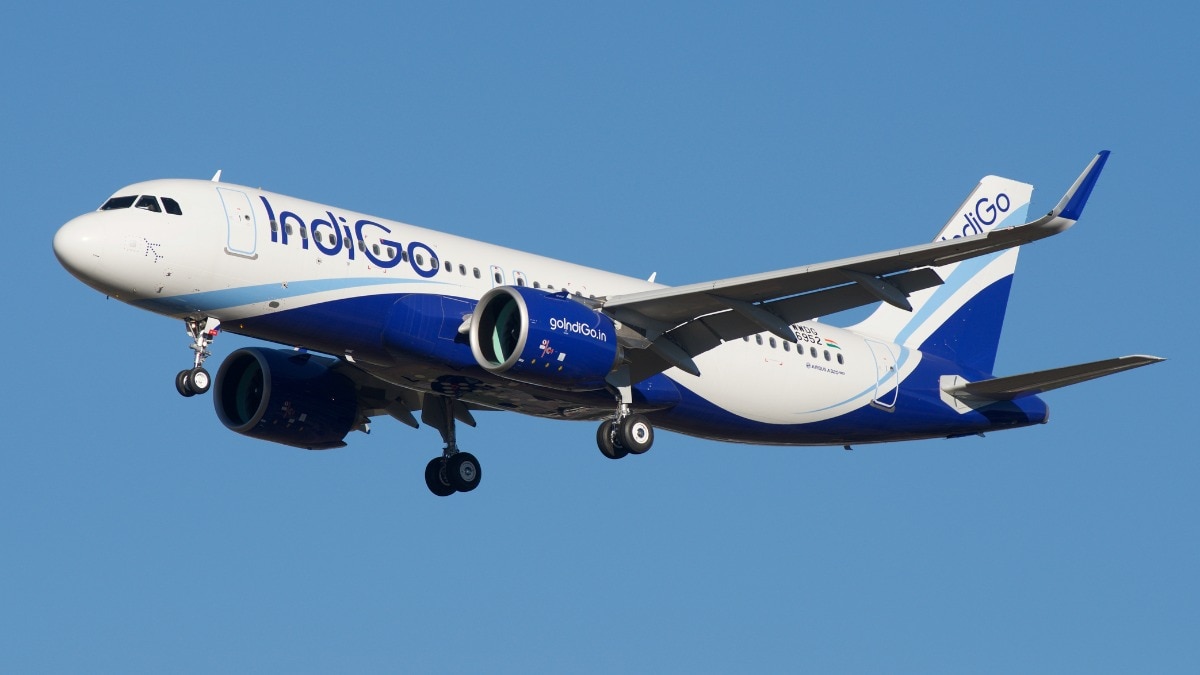
That rule quickly became a talking point on May 5 when a power bank belonging to a passenger of IndiGo flight 6E-108, which was taxiing at the Chandigarh airport after landing from Hyderabad, caught fire.
The fire broke out in the cabin so the crew could reach it immediately. They used extinguishers to douse it. All 198 passengers and the six crew members evacuated within minutes.
Power banks have time and again proved to be risky business in flying. However, it is not lax regulation why these devices are allowed inside the aircraft cabin; rather it’s a conscious decision originating from an air disaster over Dubai in September 2010. In this mishap, lithium batteries in the cargo hold of a UPS Airlines freighter had caught fire, crashing the plane and killing both crew members.
Fire investigators had pinpointed the cause to be the thermal runaway of lithium batteries—a self-propagating reaction in which cells that overheat ignite surrounding ones in a feedback loop. In response, the International Civil Aviation Organization (ICAO) expanded restrictions on carriage of loose lithium batteries in cargo holds.
A fire in the cargo hold is deadly and uncontrollable whereas a similar situation in the cabin can be detected and suppressed. Therefore, power banks are mandated to be carried with passengers.
Airbus A321, the type of aircraft operating on IndiGo’s Flight 6E-108, can carry up to, say, 222 passengers. Both the ICAO and the International Air Transport Association (IATA) allow two power banks per passenger in carry-on bags. This hypothetically means as many as 444 lithium-ion batteries in the cabin on a fully loaded flight.
The power bank regulation, however, ignores the cumulative thermal risk in sealed, pressurised environments. In 2009, the US Federal Aviation Administration published a lithium battery fire hazard alert for operators, and in 2019 specifically identified the aggregate risk of passenger-carried lithium devices. In 2022, the European Union Aviation Safety Agency published its safety information bulletin regarding in-seat storage of lithium devices.
Indian rules broadly follow accepted watt-hour safety thresholds: power banks below 100 Wh are permitted in carry-on baggage without prior airline approval; those between 100 Wh and 160 Wh require approval; and those above 160 Wh are prohibited. Even sub-100 Wh units remain subject to handling, storage and in-flight use restrictions.
The trouble is that watt-hours are printed on the device, not detected by security scanners. There is currently no standardised process at Indian airports to check Wh compliance at security gates. The system seems to rest on passengers reading the fine-print on their devices and self-reporting if the Wh exceeds norms.
Certain carriers state exactly where in the cabin a power bank should be positioned. Emirates, Cathay Pacific and Singapore Airlines informed travellers to avoid stowing power banks in seat pockets as storage points like these put the device right against flammable foam cushioning. Such guidance is not included in IndiGo’s standard pre-departure safety briefing, and only the DGCA, which approves operations manuals of airlines, can say whether it was required in this case.
On May 5, after using extinguishers, the IndiGo crew deployed emergency slides to evacuate the aircraft, potentially saving lives. The problem is mishaps don’t always happen when an aircraft is taxiing.
Subscribe to India Today Magazine
– Ends