




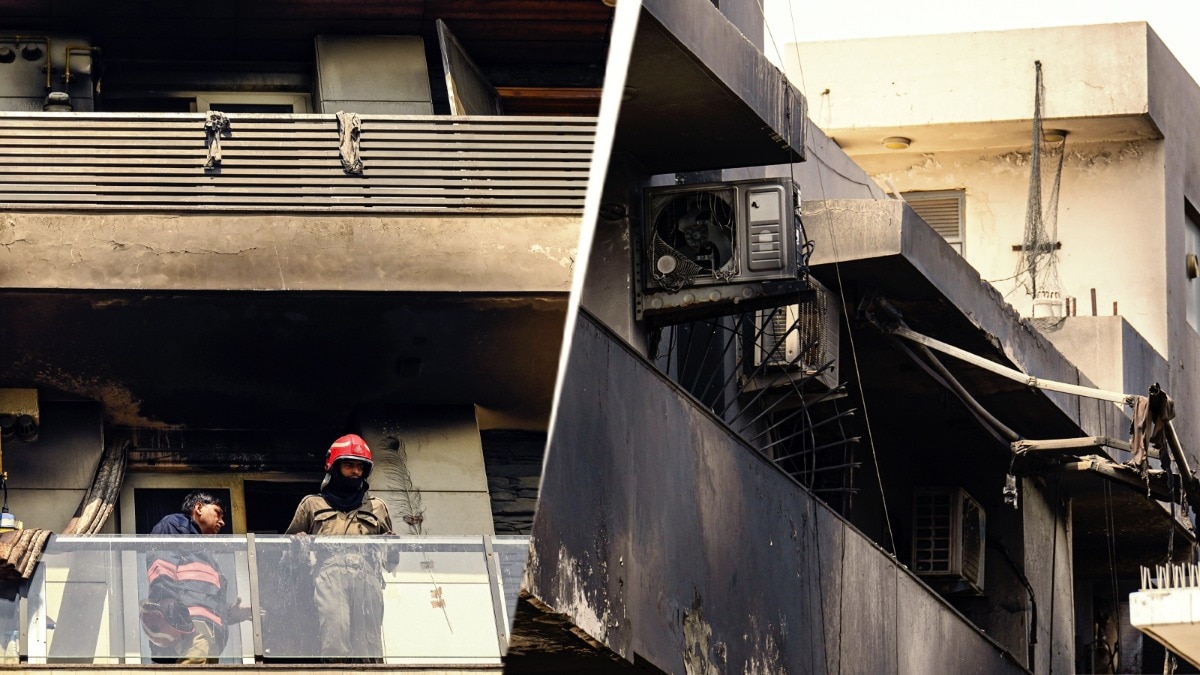
Iron grills, smart door locks that malfunctioned and a cramped layout turned a residential building in east Delhi into a death trap on Sunday, as a fast-moving fire killed at least nine people and injured four others. The combination of structural design flaws and safety measures that failed under stress left residents with virtually no escape.
The blaze broke out in a four-storey building in the Vivek Vihar area around 3:40 am, jolting at least eight families awake from their sleep. A distress call was made to the fire department at 3:47 am, followed by the arrival of ambulance services minutes later. Firefighters reached the spot around 4:05 am and began rescue operations.
Preliminary probe indicates the fire may have been triggered by a suspected air-conditioner blast. Eyewitnesses said the first sparks were seen from an outdoor AC unit on the second floor, which led to a short circuit.
The flames quickly intensified, fuelled by extensive wooden interiors, and spread toward the building’s common staircase — the primary escape route. This narrow staircase served all eight flats, creating a bottleneck during evacuation.
SMART DOOR LOCKS TRAPPED FAMILIES
The building’s design significantly hampered evacuation efforts. Built on an 800-square-yard plot, the structure comprised stilt parking and four floors, with two flats on each level connected by a single staircase and a lift.
The lack of multiple exits proved fatal as the fire spread rapidly through shared spaces.
On the second floor, the short circuit caused the electronic smart locks on the door to malfunction and jam. This trapped the residents inside their rooms. Rescue teams later recovered five bodies from the unit.
LOCKED TERRACE, BALCONIES CLOSED OFF
On the floor above, three residents attempted to flee to the terrace. However, the terrace door was locked, preventing escape. The victims first collapsed due to smoke inhalation before the fire got to them. Only charred bodies were left behind.
Another body was found on the first floor. It is suspected that jammed doors again prevented the victim from escaping.
Access to the building posed additional challenges for firefighters. The fire is believed to have started at the rear and spread both upward and downward. Rear flats had no open balconies, while side balconies were sealed with nets to keep birds out, delaying entry as crews had to cut through them.
The building was also tightly packed between neighbouring structures, leaving minimal gaps. The intensity of the blaze caused major damage to the adjoining houses.
Metal rods and the cramped quarters further restricted movement and efforts to put out the blaze.
– Ends