


It’s a Congress landslide in Kerala, ending a decade-long drought in power. Yet, even as the revelry begins, the victory uncovers an immediate and delicate challenge for the party. From choosing a Chief Minister from among competing senior leaders to managing internal equations and keeping the party united under a stable leadership, Congress is set for a prolonged test of cohesion in days to come.
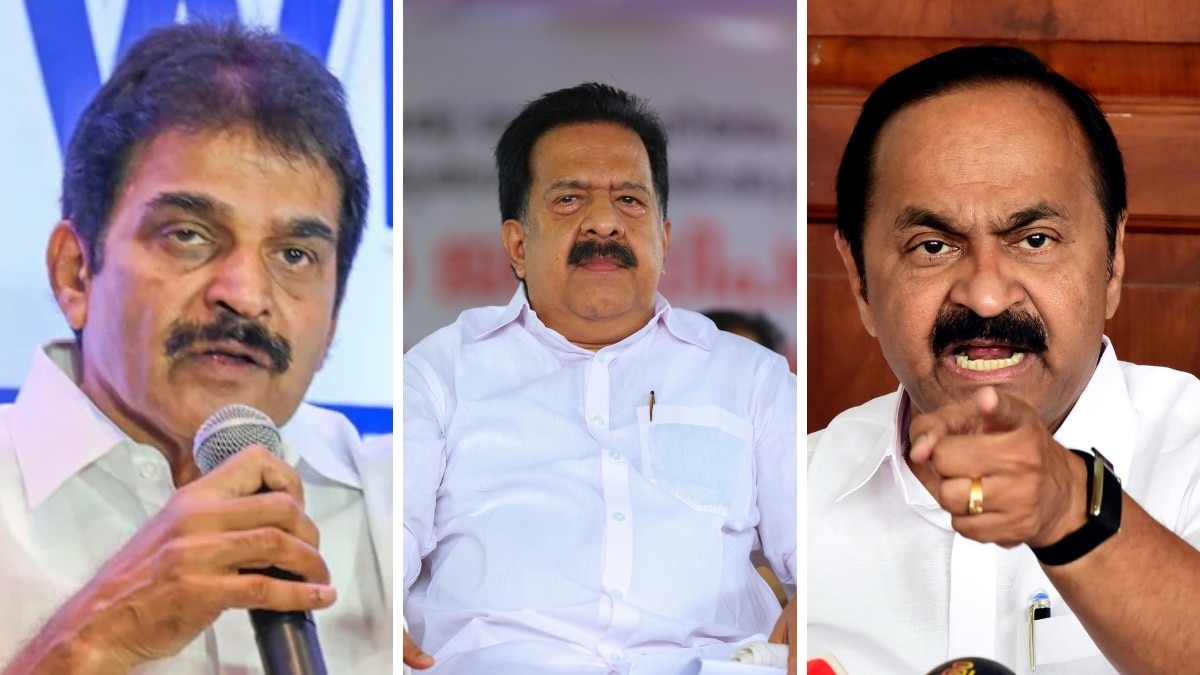
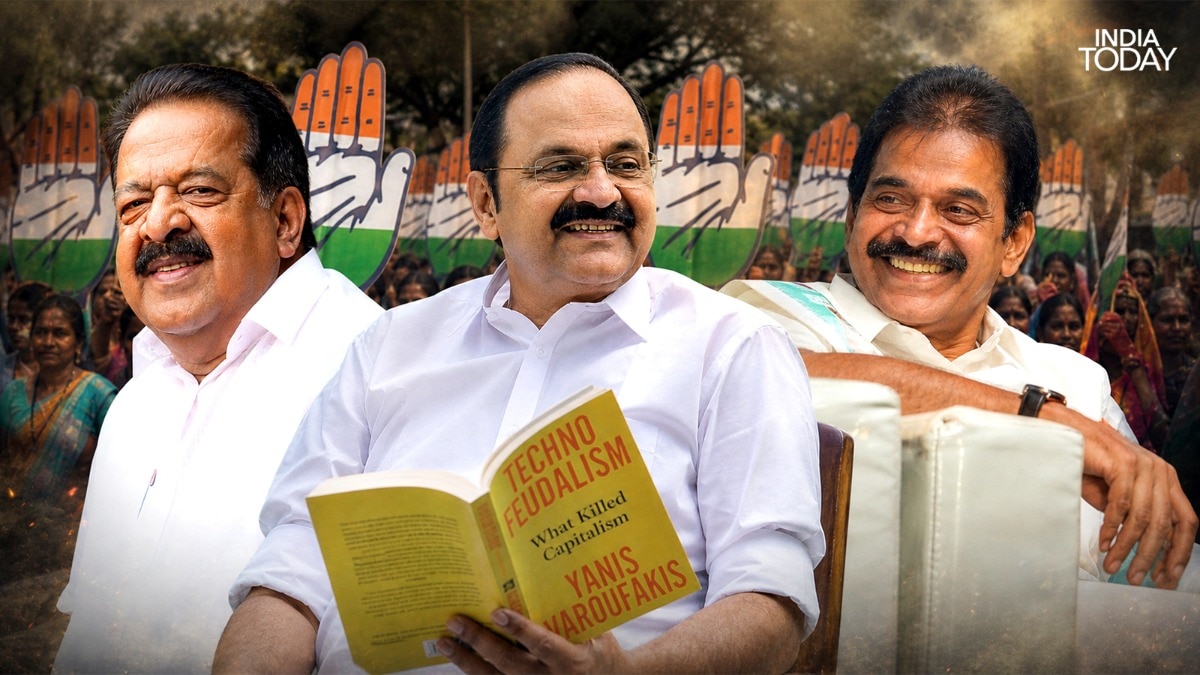
The party entered the Assembly elections without projecting a chief ministerial face and the race for the top post now has three leaders at the forefront. VD Satheesan, who led the party’s campaign over the past five years; Ramesh Chennithala, a seasoned leader with strong backing of community organisations; and KC Venugopal, a national leader who did not contest the polls but is seen as a contender for the top post.
Satheesan, the Leader of the Opposition in the state Assembly, has been the party’s most visible face, taking on the CPI(M)-led Left government at several critical political junctures. Internal assessments suggest he enjoys considerable support within the party. He also has the backing of the Indian Union Muslim League (IUML), a key ally in the United Democratic Front (UDF), and is credited with forging a broad coalition of social groups against the Left Democratic Front (LDF).
However, Satheesan, whose elevation in 2021 marked a generational shift by breaking the long-standing dominance of factional groupings within the party, is not without concerns as a CM contender. Some analysts point out that sections of Hindu community organisations remain wary of him. He is not seen as preferable by influential bodies such as the Nair Service Society (NSS) and the Sree Narayana Dharma Paripalana Yogam (SNDP) Yogam, which the Congress cannot simply ignore.
Chennithala, the 68-year-old former Home Minister and ex-KPCC chief who had served as Leader of the Opposition before Satheesan, was widely seen as the chief ministerial face in 2021. But the Congress failed to unseat the Left government, and the state re-elected the Left front for a second consecutive term for the first time in the state’s history. Many within the party believe he remains a rightful claimant to the post.
Though Chennithala has never adopted an aggressive stance on issues, energising the cadre, his strength lies in his acceptability among influential caste organisations, particularly the NSS and SNDP Yogam. This support base could prove critical in the party’s internal calculations.
KC Venugopal’s name, though not entirely unexpected, began gaining traction immediately after the polls concluded. He came to prominence following remarks by senior leader K Sudhakaran, who suggested that Kerala now needs leadership from someone like Venugopal, currently the general secretary in charge of organisation in the All India Congress Committee.
Venugopal did not contest the Assembly polls. The party had taken a policy decision not to allow MPs to contest in the April 9 elections. He could have settled the discussion over his name by simply stating that, as an MP who did not contest, he is not in the race for the chief minister’s post. However, Venugopal chose not to do so.
What may work in Venugopal’s favour is that many of the Congress MLAs who have won are believed to be his loyalists. In Delhi, sources say, he has quietly tested the waters for a chief ministerial bid and is said to have influenced candidate selections, allegedly giving his loyalists an initial “upper hand” in the process and helping secure a post-poll legislative camp majority.
If all three leaders insist on staking a claim to the top post, as appears to be the case at least in the initial days, the party’s key hurdle will be to reach a consensus and settle on a face. If KC Venugopal’s name continues to be in the fray, the first question the party will have to address is, when two key figures are already in contention, why opt for a lateral entry from Delhi?
Satheesan’s elevation, while backed by popular sentiment, could also raise concerns about the centralisation of power, given his strong and independent positioning driven by his own convictions, observers point out. However, much will depend on how he is able to build broader appeal in the initial days.
He has already won the trust of the Muslim League, and keeping it within his fold would give him a distinct advantage in pushing through key decisions. The public endorsement of Satheesan by the party’s state president, Panakkad Syed Sadiq Ali Shihab Thangal has, however, muddied the waters for the Congress high command.
His proximity to the Muslim League also presents a double-edged sword for Congress. While it strengthens coalition stability, it could give the Left, who allege that the Congress is in the “stranglehold” of the Muslim League.
Beyond the leadership question, the Congress will also have to carefully balance community representation in government formation. Ensuring adequate representation for minority allies, while also accommodating leaders from Nair and Ezhava communities, will be crucial. Any perceived imbalance could trigger political backlash.
FACTIONAL UNDERCURRENTS PERSIST
Although the Congress (A) faction, earlier led by AK Antony and later Oommen Chandy, has lost much of its influence within the party, political observers note that internal frictions persist within the Congress. Within the Congress (I) group, previously led by the late stalwart K Karunakaran, leaders such as Venugopal, K Sudhakaran and Chennithala are now seen to command their own support bases, with a visible consolidation of cadres around these key figures.
Rahul Gandhi, during his recent visit to Kerala, openly said at an event that all party leaders should work together, citing the example of a group dance where everyone performs in coordination. How well the next leader choreograph this group dance will be crucial for the party in Kerala.
For now, however, all camps profess unity. The party high command and KPCC head Sunny Joseph have both urged caution.
But with the results setting a Congress comeback in Kerala, the party’s real test will be whether it can resolve these competing leadership claims and address factionalism before forming the next government and navigating the afterstorms.
Elections 2026 | Kerala Election | Kerala Election Constituencies | Kerala Election Schedule
Tamil Nadu Election Result Live
West Bengal Election Result Live
Puducherry Election Result Live
– Ends