


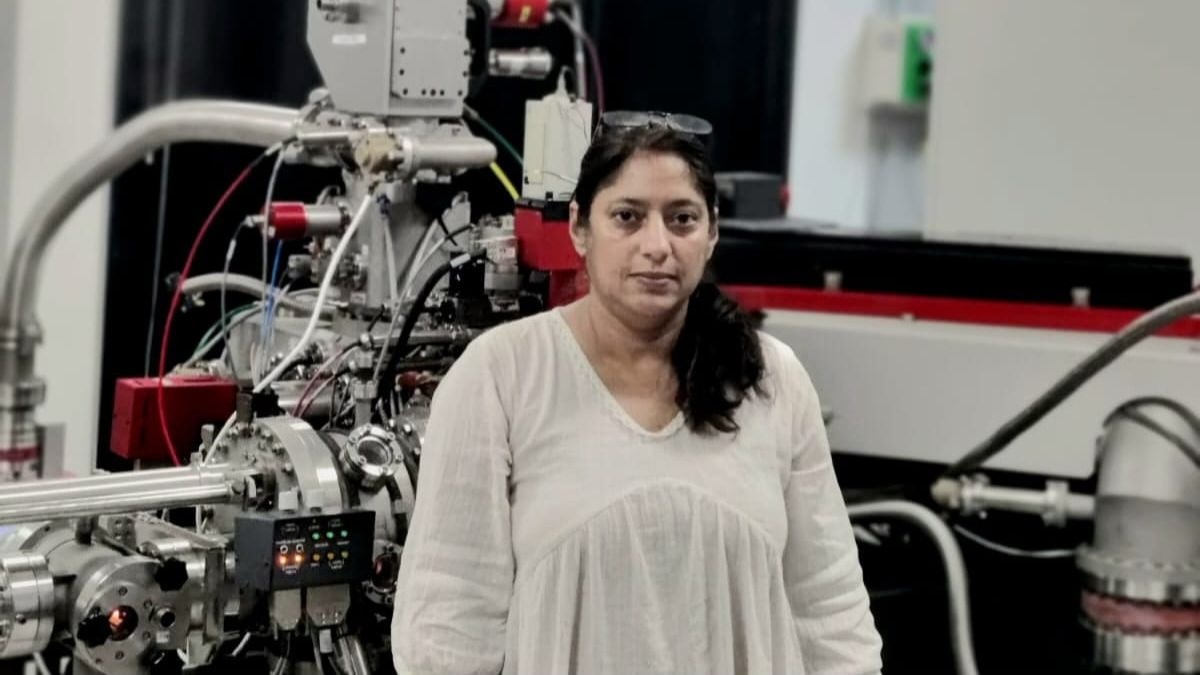
In a landmark moment for Indian planetary science, Kuljeet Kaur Marhas has become the first Indian woman to be elected Fellow of The Meteoritical Society, one of the world’s most prestigious honours in meteoritics and planetary science.
Prof. Marhas, a professor in the Planetary Science Division at Physical Research Laboratory in Ahmedabad, was elected as a Fellow of the society for 2026, joining an elite group of global scientists and researchers recognised for exceptional contributions to the study of planetary materials and the origins of the Solar System.
Founded in 1933, the Meteoritical Society has elected Fellows for more than nine decades. In its 93-year history, Prof. Marhas is only the third Indian scientist to receive the honour, following the late Devendra Lal and JN Goswami.
WHAT ARE SOME OF PROF MARHAS’S MOST PIONEERING WORKS?
Prof. Marhas is internationally known for her pioneering work on short-lived radionuclides and stable isotopes found in extraterrestrial materials. Her research spans pre-solar grains, Calcium-Aluminum-rich Inclusions (CAIs), chondrules and organic matter in meteorites, as well as samples returned from iconic space missions, including Stardust, Hayabusa and the Apollo program.
Using advanced Secondary Ion Mass Spectrometry (SIMS) and nanoSIMS techniques, she has decoded isotopic signatures preserved in ancient space materials, helping scientists better understand how the Solar System formed and evolved billions of years ago. Her work has significantly advanced the field of cosmochemistry while strengthening India’s standing in planetary science research.
Reacting to the honour, Prof. Marhas said, “It’s a testament to the vibrant research environment at the Physical Research Laboratory and the incredible potential of planetary sciences in India. Our work with extraterrestrial materials isn’t just about looking at the past, it’s about charting the future of planetary exploration.”
Prof. Marhas is also a Fellow of the American Geophysical Union and a recipient of the prestigious Devendra Lal Memorial Medal for her contributions to planetary science and cosmochemistry.
– Ends