

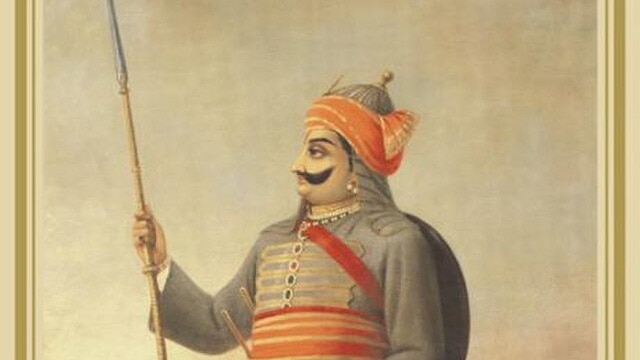
There are historical figures who ruled kingdoms, and then there are those whose lives outgrew the boundaries of their kingdoms. Maharana Pratap belongs to the second category.
Born in 1540 into the Sisodia dynasty of Mewar, Maharana Pratap remains one of the most remembered Rajput rulers in Indian history. His name survives not merely because of battles fought against the Mughal Empire, but because of the choice he made during one of the most difficult political moments of medieval India: he refused to surrender.
QUOTE OF THE DAY
“Never surrender your self-respect for comfort, because freedom earned with struggle is greater than a life lived in submission.”
The quote reflects the larger image associated with Maharana Pratap’s life — resistance in the face of overwhelming odds.
A KINGDOM UNDER PRESSURE
The 16th century was a period of expansion for the Mughal Empire under Akbar. Several Rajput kingdoms entered alliances with the Mughals through diplomacy and military cooperation. Mewar, however, remained outside that arrangement.
When Maharana Pratap ascended the throne of Mewar in 1572, he inherited not only a kingdom but also a political challenge. Mughal expansion had already altered the balance of power across north India. Chittorgarh had fallen a few years earlier after a brutal siege.
Pratap’s refusal to submit to Mughal authority turned him into both a military and symbolic figure.
THE BATTLE THAT SHAPED HIS LEGACY
The Battle of Haldighati in 1576 became the defining chapter of Maharana Pratap’s story. Mughal forces led by Raja Man Singh of Amber confronted the army of Mewar in the narrow mountain pass of Haldighati in present-day Rajasthan.
The battle did not produce a decisive military victory for Mewar. Maharana Pratap was forced to retreat. Yet the retreat itself later entered folklore because he continued resistance instead of negotiating surrender.
Stories surrounding his horse Chetak, the hardships faced by his family in forests and hills, and his years spent rebuilding Mewar became part of regional memory and oral traditions.
LIFE IN EXILE
Historical accounts describe years of struggle after Haldighati. Maharana Pratap is said to have lived in forests with limited resources while continuing guerrilla warfare against Mughal positions.
Over time, he regained several territories of Mewar except Chittorgarh. His administration rebuilt villages, reorganised military positions and restored parts of the kingdom’s economy.
This phase of his life is often remembered less for royal power and more for endurance.
WHY HIS STORY STILL RETURNS
Maharana Pratap’s story continues to appear in textbooks, political speeches, folklore, television serials and public memory because it speaks to ideas larger than monarchy — dignity, resistance and self-rule.
In modern India, his image is often invoked during discussions around courage, sacrifice and identity. Statues of the Rajput ruler stand across Rajasthan and several other parts of the country, while Haldighati remains one of the most visited historical sites linked to Rajput history.
For many, Maharana Pratap represents a ruler who chose uncertainty over compromise.
That is perhaps why centuries later, his story still survives beyond history books.
– Ends