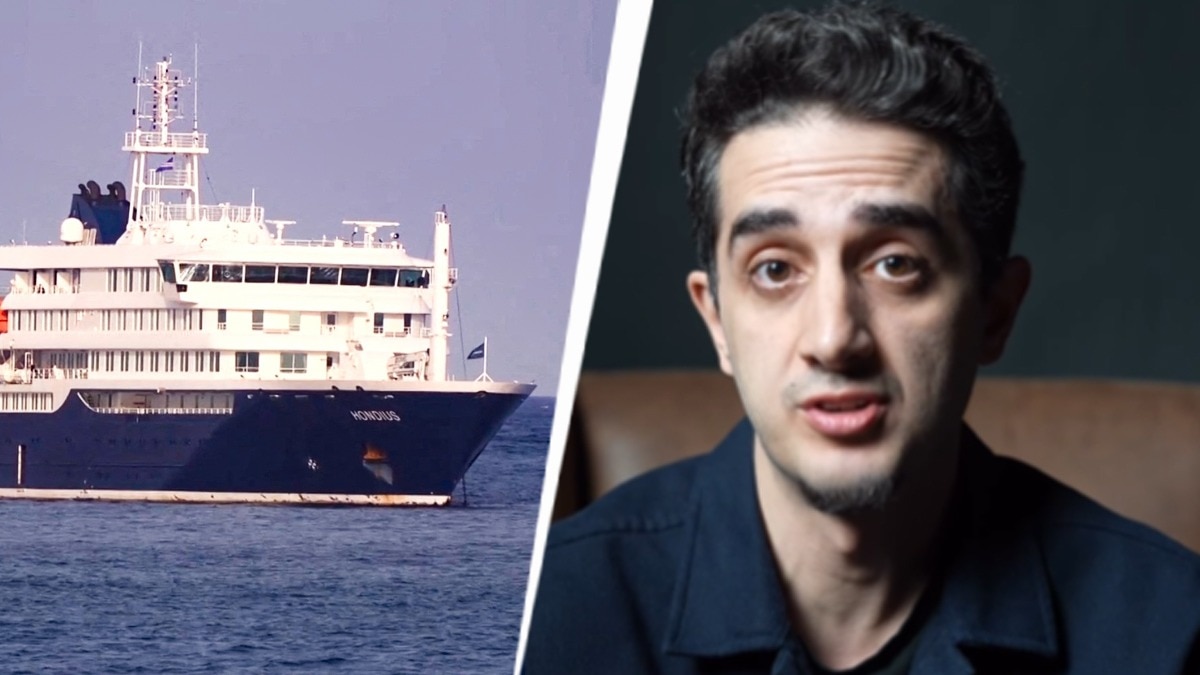







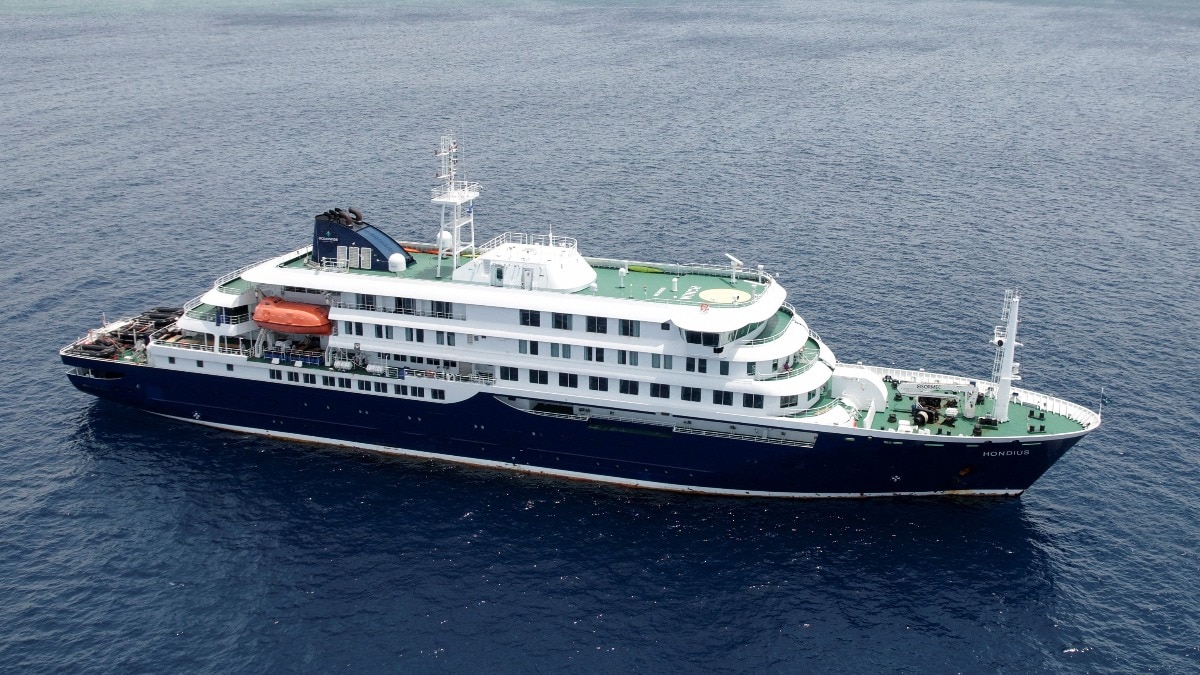
Two Indian crew members are among the 149 people aboard a luxury expedition ship stranded in the Atlantic Ocean, where three passengers have died and eight others have been infected with hantavirus, one of the rarest and most lethal viruses on the planet.
India Today TV reached out to Oceanwide Expeditions, the Dutch polar travel company that operates the MV Hondius, seeking a full account of who was on board the ship. On May 4, the company wrote back. In their response, they provided, for the first time, a nationality by nationality breakdown of every passenger and crew member on board.
The list ran to 23 nationalities across 149 people. Most were passengers, tourists from Great Britain, the United States, Germany, Spain. But buried in the crew column, alongside sailors and support staff from the Philippines, Ukraine, the Netherlands and Poland, were two names that brought this story home: India. Two Indian crew members, nationality confirmed, condition undisclosed.
Oceanwide Expeditions stated it would share new information only as soon as it had been verified, and no further details about the Indian crew members were provided. Their roles on the ship, their health status, and whether they have been in contact with any of the infected passengers, all of it remains unknown.
The virus on this ship is called hantavirus. The strain, the Andes strain, can pass between humans, but not through the air in a crowded room, not by sitting nearby. Only through the kind of closeness you share with a spouse, a cabin mate, or a doctor treating you without protection.
Here is what happened, where the ship is right now, and what this means for India.
BIRDWATCHING TOUR TURNS DEATH TRAP
The ship is the MV Hondius, a Dutch expedition vessel that left the southern tip of Argentina on the first of April. On board: 149 passengers and crew from 23 countries. Somewhere on that journey, a killer came aboard.
Argentine investigators believe the source was a birdwatching tour in Ushuaia, the southernmost city on Earth. A Dutch couple on that tour most likely inhaled microscopic particles from infected rodent droppings on the ground. They felt fine. They boarded the ship. They had absolutely no idea.
THE DEADLY COUNTDOWN
On April 11, a passenger died on board. The cause of death could not be determined on the ship. On April 24, his body was disembarked on St Helena, with his wife accompanying the repatriation. On April 27, Oceanwide Expeditions was informed that the wife had become unwell during the return journey and had later died. Both were Dutch nationals.
On April 27, another passenger became seriously ill and was medically evacuated to South Africa. This person is currently being treated in the intensive care unit in Johannesburg, in a critical but stable condition. A variant of hantavirus has been identified in this patient.
On May 2, another passenger, a German national, died on board. By then, the World Health Organisation had been alerted, and the ship was ordered to stop at Cape Verde.
As of tonight, the ship has left Cape Verde and is heading for Tenerife in Spain’s Canary Islands. Three critically ill patients have been evacuated by air ambulance. The remaining passengers disembark on May 11. Health authorities across Europe are racing to trace over 80 passengers who shared a commercial flight with one of the victims, before she was even diagnosed.
“When we say close contact, we mean very close physical contact, sharing a bunk room, sharing a cabin, providing medical care,” Maria Van Kerkhove, WHO Director, Epidemic & Pandemic Preparedness said.
Of 149 people living together on one ship for weeks, only 8 fell ill. The rest were not at meaningful risk. WHO Director General Tedros Adhanom Ghebreyesus confirmed on May 6 that the overall public health risk remains low, a position he maintained the following day as well.
Speaking on May 7, Ghebreyesus said the WHO is closely monitoring the situation, amid reports that countries whose nationals had disembarked the ship earlier are aggressively contact tracing. He also flagged a concern that will keep health authorities on edge for weeks to come: because the incubation period of the virus can stretch up to six weeks, it is entirely possible that more cases will be detected long after the ship has docked and its passengers have gone home.
A VIRUS THAT LIVES IN DUST
Hantavirus lives inside rodents, rats, mice, voles. The animals carry it without symptoms. But when their droppings and urine dry out and become airborne dust, the virus can be lethal to humans. You do not need to touch the animal. You just need to breathe the wrong air, in the wrong place.
In Asia and Europe, including India, the virus attacks the kidneys, serious, but survivable. In the Americas, it destroys the lungs. The Andes strain on this ship is the American variety. In severe cases, the fatality rate reaches 50 per cent.
WHAT IT DOES TO THE BODY?
It starts like the flu. Fever. Headache. Muscle ache. Nausea. For the first five days, there is nothing to distinguish it from a hundred other infections. Then, in severe cases, everything changes fast. The lungs fill with fluid. Breathing fails. The body goes into shock. Mild symptoms to the ICU in under 72 hours.
The incubation period, the gap between exposure and first symptoms, can be anywhere from one week to eight weeks. That long tail is exactly why tracing contacts is so difficult.
There is no vaccine. There is no specific drug. Like Covid, the only treatment is intensive supportive care, oxygen, fluids, round the clock monitoring. The patients who survived on the MV Hondius were those who reached hospital quickly. In this disease, speed is the only medicine.
WHAT IT MEANS FOR INDIA?
The two Indian crew members on board are part of a workforce that keeps these ships running, and they are far from alone in that role. The Philippines accounts for 38 of the 61 crew members on the Hondius. Ukraine provides five, the Netherlands five, and India two. It is the kind of crew composition common to expedition vessels the world over, drawn from seafaring nations, working below deck while passengers explore the world’s most remote corners above.
No information has been released about the Indian crew members’ health status, their proximity to infected passengers, or whether they have been screened.
India is not a stranger to this virus. In 2008, a study in Tamil Nadu confirmed 28 cases among warehouse workers, farmers, and tribal rodent catchers. A quarry worker tested positive as recently as 2021. The real concern for India has never been a shipborne outbreak, it is underdiagnosis. Doctors missing cases because hantavirus looks exactly like dengue or leptospirosis. The threat is quiet, not dramatic.
The MV Hondius docks in Tenerife in three and a half days. The passengers will be assessed, the ship disinfected, the contacts traced. The fate of the two Indian crew members, like much else on this voyage, remains unknown.
But this outbreak is a reminder: the world’s most dangerous pathogens do not need a passport. They travel with us, in a breath of dust, on a forest trail, on a ship crossing the Atlantic.
Vigilance is not panic. It is just good sense.
– Ends