







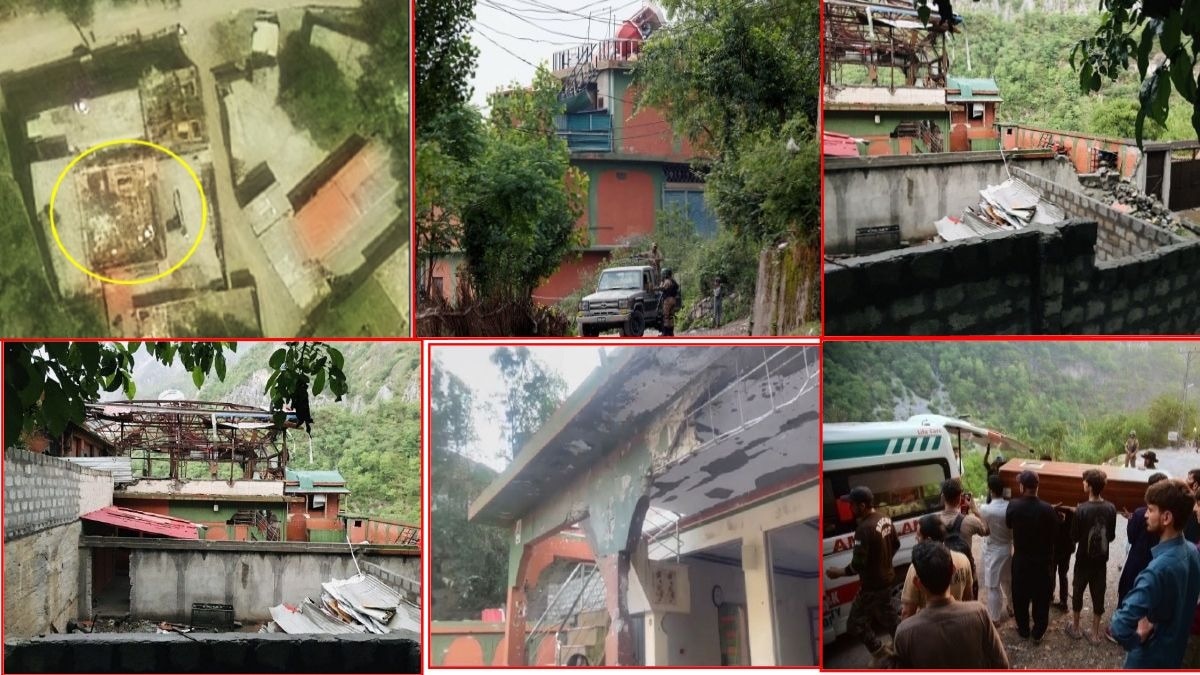
As India marked the first anniversary of Operation Sindoor, the military and strategic community reflected on a military campaign that has fundamentally altered the country’s counterterror doctrine and reshaped the security landscape of South Asia.
Seen within India’s security establishment as one of the most decisive and calibrated military operations in recent history, Operation Sindoor demonstrated the government’s ability to impose punitive costs on cross-border terror networks without sliding into full-scale war. Beyond the response to the April 2025 Pahalgam massacre, the operation established a new strategic template, in which terrorism would be treated as an act of war against India and the geography of Pakistan or Pakistan-occupied Kashmir (PoK) would no longer guarantee immunity to terrorists or their infrastructure.
The calibrated cross-border offensive was launched by the Indian armed forces on May 6-7, 2025. India targeted terrorist assets across PoK and deep inside Pakistan’s Punjab province, signalling the end of a longstanding policy of ‘strategic restraint’. For the first time in years, India struck facilities not only across the Line of Control (LoC) but also near Sialkot in Pakistan’s Punjab, demolishing Islamabad’s ‘International Border sanctuary’. The message was clear: no terror launchpad, handler or headquarter was unreachable or untouchable.
While all three military services participated, the Indian Army played the primary combat role, striking seven major facilities linked to the Lashkar-e-Taiba (LeT), Jaish-e-Mohammed (JeM) and Hizbul Mujahideen (HM). Simultaneously, the Indian Air Force (IAF) targeted their terror headquarters in Muridke and Bahawalpur—the ideological and administrative nerve-centres of Pakistan-backed terror outfits.
Operational assessments suggest the strikes were “focused, measured and non-escalatory”, avoiding Pakistani military installations and civilian areas and concentrating solely on terrorist infrastructure. The objective was to inflict direct military costs on Pakistan’s terror ecosystem without triggering uncontrolled escalation.
The army carried out focused strikes on the Sawai Nala and Syedna Bilal terror camps in Muzaffarabad; Abbas and Gulpur camps in Kotli; the Barnala camp in Bhimber; and the Sarjal and Mehmoona Joya camps near Sialkot. The IAF simultaneously struck Markaz Taiba in Muridke and Markaz Subhan Allah in Bahawalpur.
One of the most significant targets was the Sawai Nala camp, also known as Bait-ul-Mujahideen. For over two decades, it had served as the LeT’s primary recruitment and combat-training centre and was linked to several terror attacks on India in 2024 and 2025. Located close to the infiltration routes into Kupwara and Bandipora in Jammu and Kashmir, the camp reportedly housed barracks, administrative blocks and terrain-simulated training grounds.
The Syedna Bilal camp functioned as a specialised JeM facility for explosives training, jungle warfare and asymmetric combat training. Intelligence assessments identified it as a major storage and distribution hub for IED components and communication equipment. Indian planners reportedly viewed the destruction of the camp as a ‘technical bottleneck’ in JeM’s operational chains as this had eliminated explosives intended for use in the outfit’s summer infiltration cycle of 2025.
In Kotli, the army targeted the Abbas camp, located around 13 km from the LoC and used for raising suicide bombers (fidayeens). Intelligence inputs indicated that a suicide squad there was awaiting deployment to strike in Jammu. The facility reportedly featured mock-ups of Indian security installations and residential complexes and was used for hostage-taking and urban-warfare drills. Several militants and trainers were reportedly eliminated in the Indian Army attack.
Another major target was the Gulpur camp, a key LeT infiltration launchpad that coordinated operations in the Rajouri-Poonch belt of Jammu and Kashmir. Militants trained there were linked to multiple attacks in 2023 and 2024 that caused civilian casualties. The camp also reportedly hosted senior LeT commanders, including Zaki-ur-Rehman Lakhvi, who is linked to the 26/11 terror attacks on Mumbai. Satellite-guided loitering munitions and precision smart weapons were used to destroy the camp’s communication and administrative infrastructure.
The Barnala camp, located roughly 9 km from the LoC, functioned as a ‘finishing school’ for infiltrating militants. Operatives reportedly received final-stage weapons handling, IED fabrication and jungle-survival training before crossing into India. It was also a distribution centre for sticky bombs and magnetic mines. India’s precision strikes destroyed weapons depots and IED assembly sheds at the camp.
The most strategically significant escalation came with strikes on the Sarjal and Mehmoona Joya camps inside Pakistan’s Punjab province as it deflated the assumption that India would limit operations to areas around the LoC.
Sarjal, located around 6 km inside Pakistani territory, was being jointly used by JeM and LeT for training terror modules that targeted Jammu and Kashmir police personnel. Intelligence agencies had linked it to a March 2025 attack in which four police personnel were killed. By targeting Sarjal, India signalled that the International Border could no longer shield the terror infrastructure in Pakistan.
The Mehmoona Joya camp, located 12-18 km from the International Border, reportedly served as an HM command centre overseeing operations in Kathua and Jammu. Intelligence intercepts suggested the facility coordinated with sleeper cells and over-ground workers while planning lone-wolf attacks on Indian infra projects. The strike reportedly destroyed its communication and command systems, severely disrupting the Hizbul’s Jammu network.
Operational assessments suggest the cumulative impact of Operation Sindoor was devastating for Pakistan-backed terror groups. The LeT reportedly lost recruitment centres, fidayeen facilities, infiltration launchpads and nearly 100 trained militants. The Jaish lost both its headquarters and technical staging infrastructure while the reported death of top commander Abdul Rauf Azhar is expected to deepen divisions in the outfit. The Hizbul’s command-and-control structure in Jammu was also severely degraded.
Experts also point to Pakistan’s deepening internal crisis under its army chief General Asim Munir. The arrest of former prime minister Imran Khan in May 2023, the mass public protests that followed, the detention in 2024 and sentencing of former ISI chief Lt Gen Faiz Hameed the following year, and military trials of civilians have created a severe legitimacy crisis. Simultaneously, the unrest in Balochistan, PoK, Gilgit-Baltistan and Sindh, combined with Pakistan’s economic decline and public anger against the military establishment, has intensified internal instability.
Analysts have also questioned the timing of the Pahalgam attack, linking it to developments such as the hijacking of the Jaffar Express in March 2025 by the Balochistan Liberation Army, the Pakistan military blaming India for the episode, and Gen. Munir’s speeches calling Kashmir Pakistan’s “jugular vein”. Intelligence sources cited claims that before the attack, the US-based Maxar Technologies had received 12 requests for high-resolution imagery of Pahalgam from a Pakistan-based company identified as BSI.
India reportedly carried out Operation Sindoor using long-range stand-off weapons, air-launched missiles and loitering munitions launched entirely from Indian airspace. Simultaneously, the Indian Navy deployed 36 warships near Karachi, reportedly enforcing a ‘de facto blockade’ that severely restricted Pakistani naval movement.
India’s security establishment argued that the operation shattered Pakistan’s ‘depth illusion’ by striking targets way inside Pakistani territory, including Bahawalpur, located over 100 km from the International Border. Facilities operating under civilian or dual-use cover would no longer enjoy immunity, signalled India.
Within days of Operation Sindoor, Pakistan launched a retaliation under Operation Bunyan-Um-Marsoos, using drones and missiles. However, India’s integrated air-defence network intercepted multiple threats, after which the IAF reportedly conducted counter-strikes on 11 Pakistani airbases. Reports suggested Pakistan’s director general of military operations sought peace talks within eight hours.
Analysts described the episode as one of the “fastest conventional military collapses in modern history”. These highlighted Pakistan’s heavy dependence on Chinese military hardware, including HQ-9 and LY-80 air-defence systems and CM-401 hypersonic missiles, which nevertheless failed to penetrate India’s integrated air-defence shield.
Strategically, Operation Sindoor marked a watershed in India’s military doctrine. Through precision strikes, loitering munitions, smart artillery and stand-off systems, India demonstrated a willingness to proactively target terror infrastructure while carefully managing escalation. More importantly, by striking across both the LoC and International Border, India fundamentally altered the deterrence equation in the subcontinent.
Operation Sindoor was a masterpiece of precision, precaution and proportionality, demonstrating that India’s fight against terrorism was backed by both superior military capability and unwavering political resolve. The targeting of seven key terror hotspots based on their specific roles as training centres and launchpads was an intervention aimed at the very heart of Pakistan’s proxy war.
By dismantling these nodes, the Indian Army not only secured justice for the victims of the Pahalgam massacre but also established a potent deterrent against future misadventures. As this ‘new normal’ takes root, the message to sponsors of terrorists is clear: no camp is too remote, no sanctuary too deep and no border a barrier to India’s right to respond.
Subscribe to India Today Magazine
– Ends