








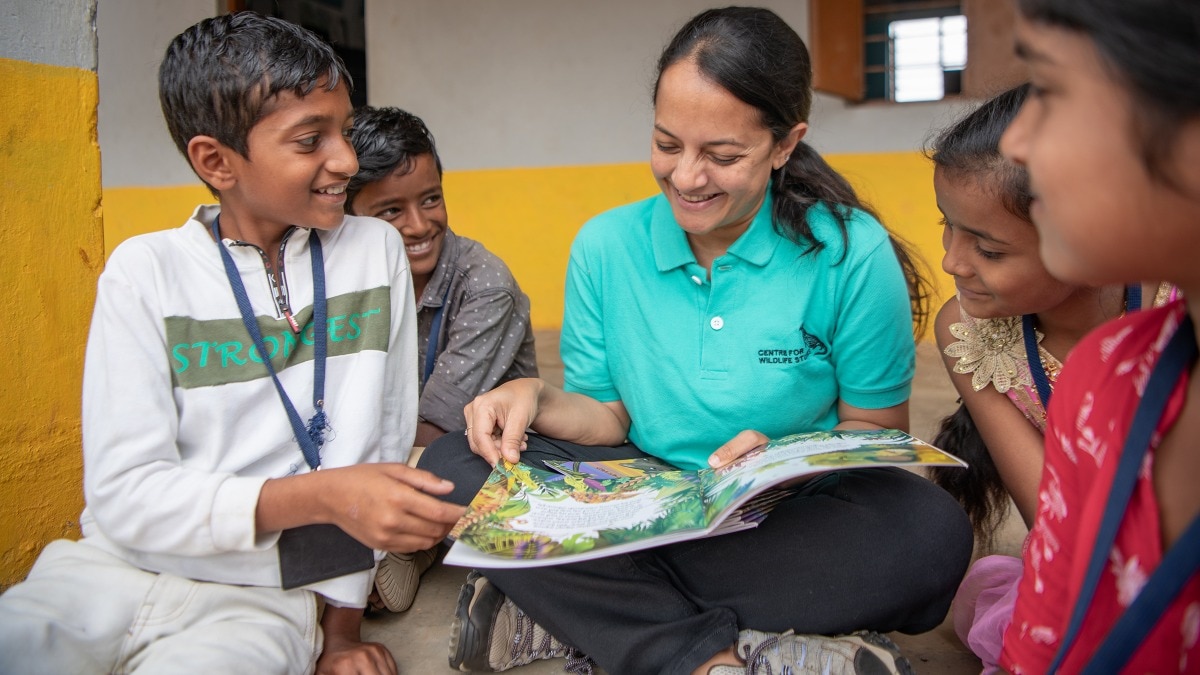
She has spent nearly three decades in the wild, counting tigers, talking to farmers, and teaching children why a leopard in the backyard is not always a bad thing.
Now, Krithi K. Karanth has been given the highest honour a nature explorer can receive.
The National Geographic Society has named Karanth the 2026 Rolex National Geographic Explorer of the Year, making her the first Indian ever to win this prestigious title. The announcement was made in Mumbai on May 6, 2026.
Karanth is the chief executive officer of the Centre for Wildlife Studies (CWS), a non-profit organisation based in India that works to protect the country’s wildlife.
Her speciality? Getting humans and animals to live peacefully side by side, which, if you have ever lived near a forest, you know is far easier said than done.
WHAT KRITHI K. KARANTH HAS ACTUALLY DONE FOR WILDLIFE IN INDIA
The numbers are staggering. Under her leadership, CWS has reached 7,000 villages across India, helping over 1,00,000 people deal with human-wildlife conflict, which simply means the tension that arises when wild animals and humans compete for the same space or resources.
She has partnered with 10,000 farmers to adopt wildlife-friendly agricultural practices and trained 50,000 local community members in over 100 wildlife reserves spread across eight Indian states.
She has also authored over 100 scientific research papers and mentored more than 300 young scientists from countries including Chile, China, Indonesia and the United Kingdom.
WHAT IS WILD SHAALE, AND WHY DOES IT MATTER?
One of Karanth’s most beloved projects is Wild Shaale, which means Wild School in Kannada. It is a conservation education programme that uses art, storytelling and play to teach children living near forests how to coexist with wildlife.
Since 2018, it has reached 72,000 children across 1,626 schools. The idea is simple but powerful: if a child grows up respecting a tiger rather than fearing it, the tiger has a better chance of surviving.
Karanth has previously won the 2019 Rolex Laureate award and the 2025 McNulty Prize, among more than 50 other honours.
National Geographic Society CEO Jill Tiefenthaler called her work visionary, collaborative and profoundly optimistic. It is hard to disagree.
– Ends