



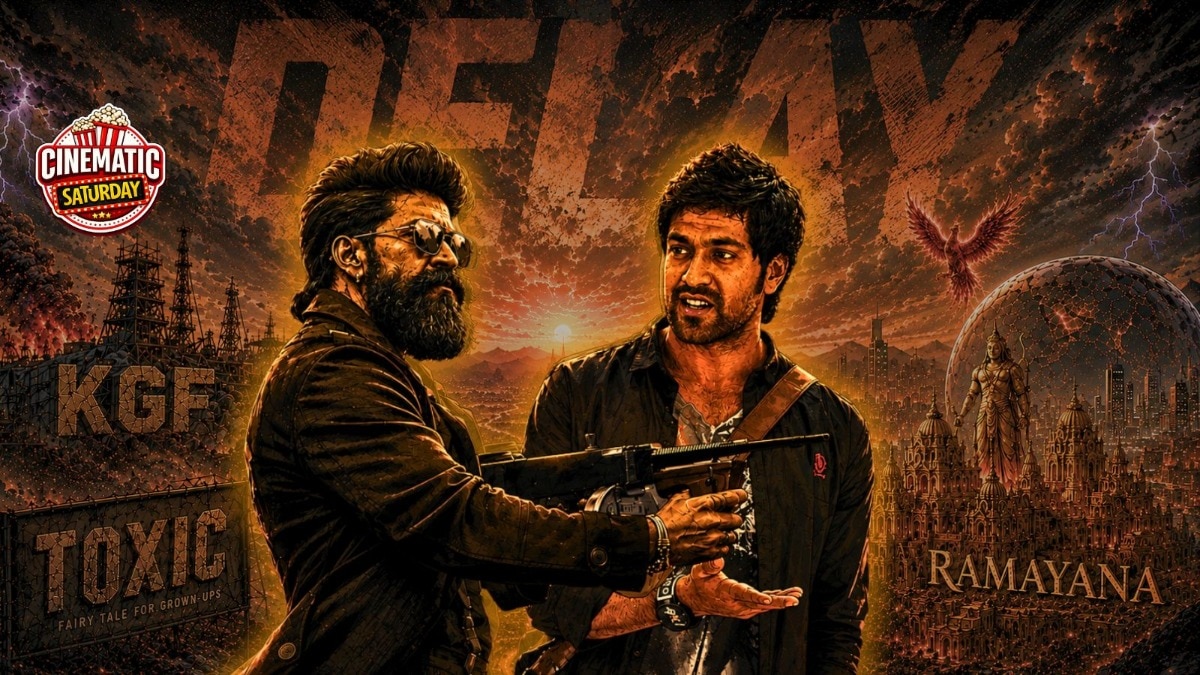
“Delays, delays, delays — I don’t like it, I avoid. But ambition is leading to delays, I can’t avoid.” A reworked spin on a viral line from K.G.F: Chapter 2 feels fitting for Rocking Star Yash right now. His ambitious upcoming film, Toxic: A Fairytale for Grown-ups, has faced yet another postponement, with the release date being deferred from June 6 this time. The pan-India star stands at a crossroads.
It is being said Yash wants to take Indian cinema onto the global stage with Toxic and, hence, is leaving no stone unturned. The film reflects his ambition and long-term vision. But as delays continue, leading to a more than four-year absence from the box office since his K.G.F success, a question lingers — is this a calculated step towards global stardom or is the delay distancing him from his core audience – his Sandalwood fans as well as the pan-India box office?
Is Toxic the sun to Yash’s Icarus, or will it be the fire from which he rises like a phoenix to newer heights?
To understand the weight of that question, one must first look at Yash’s impact on the Kannada film industry.
From Naveen Kumar to Yash
The man we know today as Yash — a box-office force in Indian cinema — once struggled to make ends meet as a teenager in Bengaluru. Born Naveen Kumar in Mysuru, the son of a government bus driver and a homemaker, he moved to Bengaluru after senior school to become an assistant director. His first opportunity collapsed within two days. Left with just Rs 300, a condition that he could not return home, and a childhood dream of acting, he chose to stay back.
He began in theatre with BV Karanth’s Benaka troupe, working backstage for Rs 50 a day before moving into acting and eventually playing the lead in a stage production in 2004. The same year, he entered television with Uttarayana, followed by Nanda Gokula in 2005, where he met Radhika Pandit.
Film offers came, but his insistence on reading scripts was seen as arrogance. Reflecting on it at a 2025 promotional event, Yash said, “As a youngster trying to break into the film industry, I would ask the directors for my copy of the script. They would judge me as arrogant. But my point was, ‘how can I be a part of something if I don’t believe in it? I have lost many films because of this’.”
The K.G.F star made his film debut with Jambada Hudugi in 2007 and, around this phase, adopted the name Yash — marking the start of a screen persona that would soon grow far beyond its beginnings. The start of his career was rocky, but his potential did not go unnoticed. Offers began to come in, and Yash soon emerged as a young and promising talent in the industry.
Rocking Star of Kannada Cinema
Soon after his debut, an opportunity came Yash’s way to replace another actor in Moggina Manasu (2008). In a brief but impactful role opposite Radhika Pandit, he caught the audience’s attention as a charming young presence, winning the Filmfare Award for Best Supporting Actor (Kannada) — an early breakthrough.
A few lead roles followed, earning recognition but not yet translating into consistent box-office impact. That changed with Modalasala (2010), where he was introduced as Rocking Star in the title card. The film marked his first commercial success as a lead and laid the foundation of a growing fan base. Films like Kirataka, Lucky and Jaanu built on that momentum.
Between 2012 and 2014, that promise turned into dominance. Beginning with Yogaraj Bhat’s Drama, Yash delivered a string of commercial successes with Googly, Raja Huli, Gajakesari and Mr and Mrs Ramachari. The latter’s success cemented Yash as a top-tier star — a bona fide box-office force and a true superstar of Kannada cinema, with a fan base rivaling Kichcha Sudeep and Darshan. For many, this would have been the ceiling. For Yash, it was only the beginning.
Turning Point: From Kannada Star to Pan-India Force
“This is just the beginning. Watch out guys, Kannada cinema will be going to a whole another level!” said Yash in 2015 as he collected his Best Actor award for Mr and Mrs Ramachari at SIIMA. A few years later, those words would echo far beyond the stage.
KGF: Chapter 1
Following the film’s success, Yash signed multiple projects, one of them being Prashanth Neel’s K.G.F: Chapter 1, backed by Hombale Films. Mounted on a reported budget of Rs 80 crore, it was the costliest Kannada film at the time. After a lengthy pre-production, Yash stepped into the role of Rocky Bhai — marking the beginning of a defining chapter in his career. A huge risk he took at a time when his career within the Kannada industry was peaking.
Released in 2018, K.G.F: Chapter 1 was built on scale and conviction. Yash actively pushed for a wider reach, taking the film across industries, dubbing it into multiple languages and securing distribution beyond its home market. The gamble paid off. Despite clashing with Shah Rukh Khan’s Zero, the film emerged as a breakout success, collecting around Rs 240 crore worldwide, with the Hindi version alone contributing roughly Rs 45 crore.
More than the numbers, K.G.F: Chapter 1 signalled a shift — Kannada cinema had arrived on the national stage, with Yash at the centre of it. Following its OTT debut, the film’s reach expanded further, with anticipation for the sequel growing significantly.
KGF: Chapter 2
Delayed by the pandemic but fuelled by soaring anticipation, K.G.F: Chapter 2 released in 2022 to record-breaking opening weekend numbers. The momentum only grew stronger, with the film going on to gross over Rs 1,200 crore worldwide. In the Hindi belt, it emerged as one of the biggest successes ever, second only to Baahubali 2: The Conclusion at the time.
More than the numbers, it was the cultural impact that stood out. Yash’s Rocky Bhai evolved into a pop culture icon, resonating across languages and markets. In the process, Kannada cinema was not just noticed — it positioned itself as a serious box-office force, standing shoulder to shoulder with Hindi and Telugu industries in 2022.
Yash, K.G.F and Kannada Cinema
The year 2022 marked a defining year for Kannada cinema. Following the success of K.G.F: Chapter 2, films like Kantara, Vikrant Rona, 777 Charlie and James found both commercial success and nationwide recognition, each crossing the Rs 100 crore mark and expanding the industry’s reach beyond Karnataka.
At the centre of this shift was Yash and the K.G.F franchise, which emerged as the flag bearer of Kannada cinema’s pan-India push — opening doors for filmmakers to think bigger and scale wider.
Trade analyst Ramesh Bala notes that while Kannada cinema always had strong storytelling, its reach remained largely regional before KGF. “Yash and K.G.F: Chapter 1 and Chapter 2 changed the scale of perception nationally. It proved a Kannada film could command pan-India hype, massive theatrical pull, and cultural impact across languages,” he says, underlining how the franchise not only elevated a star but redefined the industry’s standing across the country.
The Parallels: Yash, Prabhas and Allu Arjun
In the process, Yash cemented his place among the biggest box-office draws in Indian cinema today — a trajectory that places him alongside contemporaries like Prabhas after the Baahubali films and Allu Arjun after Pushpa 2: The Rule, who similarly redefined stardom beyond regional boundaries.
Prabhas was the first among the lot to command a nationwide fan base after Baahubali 2: The Conclusion. However, his immediate follow-ups struggled to sustain that momentum despite strong openings, exposing inconsistent script choices. He gradually course-corrected with films like Salaar: Part 1 – Ceasefire and Kalki 2898 AD, while maintaining visibility through a packed slate including Spirit, Salaar 2 and Kalki Part 2.
Allu Arjun, meanwhile, capitalised on the success of Pushpa 2: The Rule with a shorter turnaround. After dedicating nearly five years to the franchise, he quickly announced a collaboration with Atlee, later titled Raaka, and also lined up a project with Lokesh Kanagaraj.

Unlike Prabhas and Allu Arjun, whose post-breakout careers remained visible despite experimentation, Yash’s next phase has largely unfolded away from the public eye. From prolonged script selection to repeated delays, the gap has widened — raising a key question: Is this calculated ambition, or a growing concern for his audience?
Toxic and the Big 4-Year Gap
After the success of K.G.F: Chapter 2 in April 2022, anticipation around Yash’s next move was immediate. Having spent nearly six years on the KGF franchise, a short break felt warranted — but few expected the wait for his next release would stretch beyond four years. Speculation around a collaboration with Geetu Mohandas continued until December 2023, when Toxic: A Fairytale for Grown-ups was officially announced, instantly reigniting fan excitement.
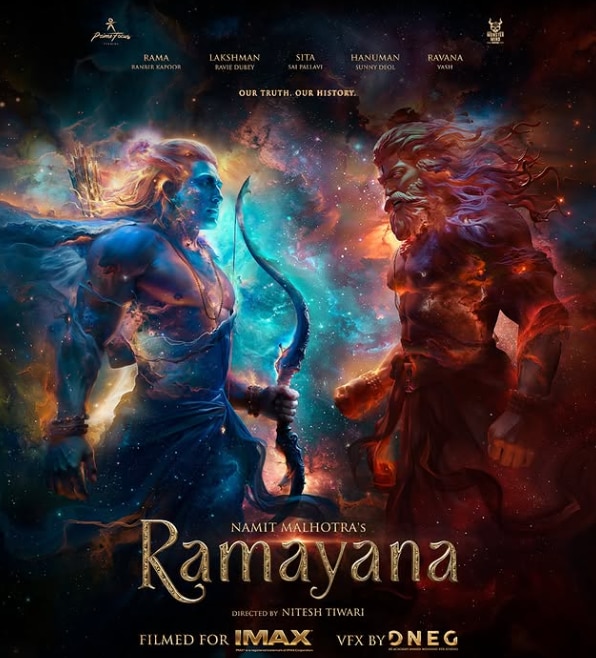
Around the same time, reports of Yash playing Ravana in Nitesh Tiwari’s Ramayana also gathered momentum, eventually turning the moment into a double boost for fans.
Toxic was initially slated for April 2025, while Ramayana was planned as a two-part release across 2026 and 2027. Yet, with Toxic, the rollout has repeatedly drifted into uncertainty.
Excitement and scrutiny have gone hand in hand with Toxic. The announcement sparked instant buzz, briefly masking the long silence that followed. But as the initial release window neared, another year-long delay reignited frustration. The teaser on Yash’s birthday brought renewed excitement, but also confusion around the film’s tone, given the graphic visuals. Subsequent updates — from character posters to chatter about a clash with Dhurandhar 2 — only led to the mixed response. The polarising teaser further amplified attention, even spilling into prime-time discussions.
Around that time, reports that Yash was reworking portions of the film’s VFX added another layer of uncertainty. From announcement to now, “polarising” best defines the Toxic journey.
The gap, however, is one of releases — not of work. Addressing fan frustration in a recent interview, Yash said, “People are upset with me because my last release (K.G.F: Chapter 2) was in 2022. But the kind of vision and path we have chosen (for Toxic) requires that amount of time and involvement. We are trying to position our film on a global platform Though I’ve not been on screen for a while, I have been constantly working without a break.”

Trade analyst Ramesh Bala echoed a similar view, saying repeated delays around Toxic have impacted release planning and also postponed a major showcase moment for Kannada cinema after the K.G.F expansion. At the same time, he noted that the prolonged gap has significantly increased expectations for Yash’s comeback.
Yash at CinemaCon 2026
It was Yash’s presence at CinemaCon 2026 in Los Angeles that made clear the fact that the actor has global impact in sight now. He was there to promote Toxic, as well as Ramayana. He offered fresh insight especially into Toxic.
At the event, Yash described Toxic as a “layered” film — one that goes beyond the surface of a conventional actioner. An exclusive nine-minute preview unveiled at the event provided a deeper look into the film’s world, with guests expressing excitement at what they saw.
Yash also revealed that the film is set in a period when India had gained Independence, but Goa remained under Portuguese rule. The detail helped contextualise the film’s distinct visual tone, addressing earlier questions around its setting and aesthetic. Speaking about the film, he said, “It’s a very unique way to present a dark character… My director, Geetu Mohandas, has really given a new take on a gangster film and I enjoyed it. It’s going to be a visual treat as well as something which makes a huge impact on the audience’s psychology as well.”
For a moment, the update reset the narrative — curiosity replaced confusion, and excitement returned. Yet, despite Yash maintaining a June release window, Toxic was once again postponed indefinitely. In many ways, the film’s journey now mirrors a pattern — just as anticipation begins to peak, it pulls away, turning what began as excitement into a prolonged, uncertain wait.

The Void Left in Sandalwood
The Kannada film industry, or Sandalwood, witnessed a defining high in 2022 after K.G.F: Chapter 2 — but the fall that followed was just as sharp. While that year saw a surge of pan-India successes, 2023 and 2024 proved underwhelming, with several top stars tied up in long-gestation projects. The result was a noticeable slowdown at the box office, leaving exhibitors and audiences with fewer marquee releases to rally behind. At the centre of this gap is Yash — the face of the industry’s nationwide breakthrough — whose prolonged absence from theatres has created a significant void.
Trade analyst Bala underscores the impact: “Yash has evolved into a genuine superstar after K.G.F: Chapter 2, so a four-year gap naturally creates a void at the box office, especially for Kannada cinema. His films don’t just open big — they drive nationwide attention towards the industry itself.” As anticipation builds for his return, the lack of a ‘Rocking Star’ release has not just affected headline numbers, but also overall footfall, pointing to a dip in audience momentum.
Bengaluru-based exhibitor Janardhan Reddy echoes a similar sentiment. “When a star like Yash’s film releases, audiences are automatically drawn to theatres, at least on the opening weekend. This, in turn, brings visibility to smaller films releasing around the same time,” he says.
This brings us back to the larger question: While Yash’s global ambitions with Toxic: A Fairytale for Grown-ups and Ramayana may prove rewarding in the long run, are they coming at a cost in the present? Is the pursuit of a global stage creating distance from the Kannada industry, the exhibitors who rely on his pull, and a local fan base that has stood by him from the start?
Global Ambition vs Regional Roots
As mentioned earlier, Yash and the makers of Toxic: A Fairytale for Grown-ups are aiming for a large-scale international release. Ramayana, backed by Namit Malhotra, is similarly mounted with global ambitions and positioned for audiences beyond India. Yash indicated that the response at CinemaCon reinforced the team’s intention to take Toxic to its “fullest potential worldwide,” with international distribution and partnerships currently being aligned.
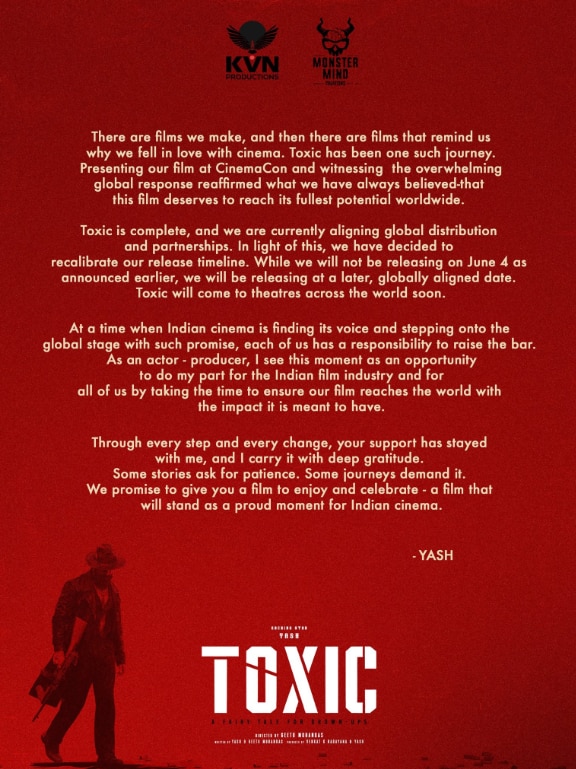
The ambition is clear and forward-looking, but it also arrives at a time when the Kannada industry continues to feel the impact of Yash’s prolonged absence.
The absence is felt even more sharply in tier-2 and tier-3 centres. “While theatres in bigger cities can sustain thanks to films from other languages, smaller towns that rely heavily on regional cinema take a bigger hit when stars like Yash are not on screen regularly,” Reddy said, highlighting how one star’s gap can ripple across the ecosystem.
Yash’s fandom has long been one of his biggest strengths. From his rise in Kannada cinema to the nationwide success of K.G.F, fans have stood firmly behind his ambitions. But with the prolonged absence and repeated delays surrounding Toxic: A Fairytale for Grown-ups, even that patience is beginning to wear thin.
The concern now is whether the long wait risks turning anticipation into detachment — something Toxic can hardly afford at this stage.
In Conclusion
As Yash himself acknowledged, the prolonged absence has left fans restless, and repeated delays have only sharpened the scrutiny around Toxic: A Fairytale for Grown-ups. What began as anticipation now sits at a delicate tipping point.
Ironically, the moment also defines the scale of his ambition. With Toxic and Ramayana positioned as global projects, the stakes are no longer just about a successful comeback — they are about whether Yash can translate vision into impact without losing the audience that built him.
Is this the risk of flying too close to the sun, or the pause before a resurgence? The answer, much like Toxic itself, lies in what comes next. The next time Yash walks into theatres, it will not just be a comeback — it will be a verdict.
– Ends
MUST WATCH: