







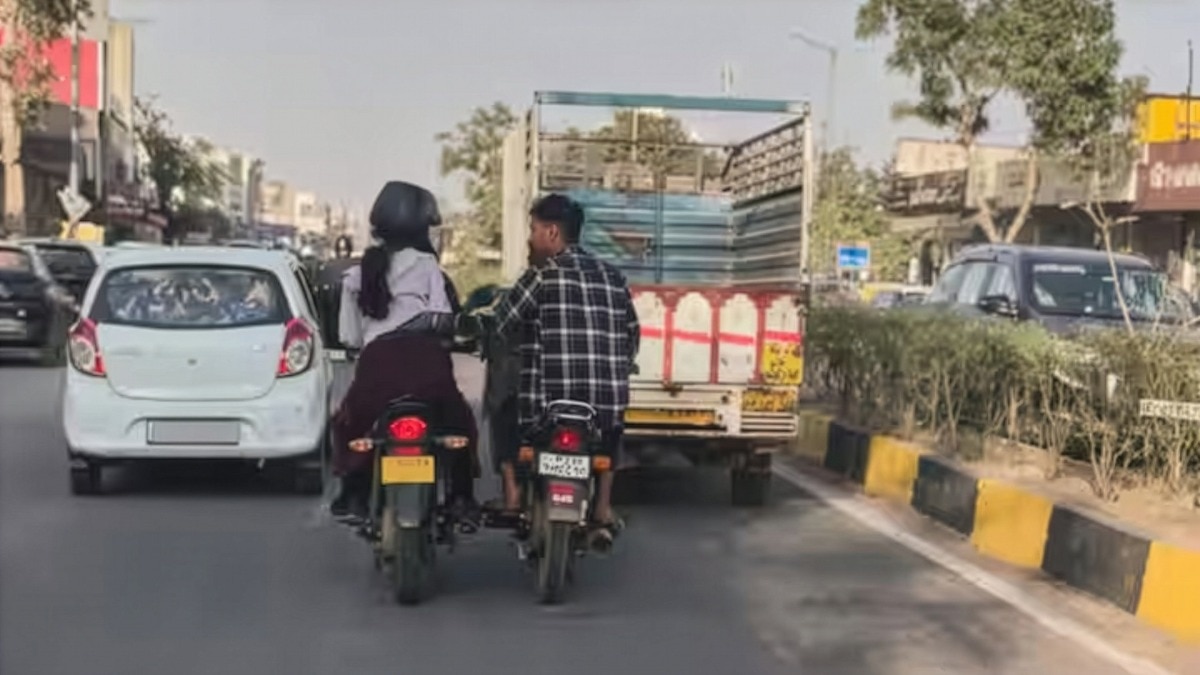
On April 13, police in Rajasthan arrested four men—Manraj Meena, Sudama Meena, Mahesh Banjara and Lokesh Banjara—for allegedly pulling up the top of a woman riding on a bike taxi on a busy road. Days later, Rahul Gurjar, a repeat offender with cases in Jaipur and Gwalior, was held for allegedly molesting a pregnant woman in Jaipur’s Malviya Nagar.
In both cases, the common thread was not only crimes against women but the camera that captured the acts. As videos of the incidents circulated widely, outrage surged and police response accelerated.
“The moment senior officers learnt about these cases, we put in maximum effort to arrest the accused. We also acted against police personnel who had not taken the complaint seriously,” said a senior police officer. That admission revealed the fault line: urgency of action rode on crime going visible and viral.
From CCTV cameras to mobile phones, India is confronting what women have always known: there is no truly safe corridor. Not on a busy street, not in public transport, not even in spaces routinely described as ‘secure’.
Yet visibility alone is not enough to deter sexual misconduct. In 2023, a video from Delhi showed a man openly masturbating inside a city bus, surrounded by passengers. The clip forced action only after it went viral. Women later said such incidents were common enough. This March, a Delhi court upheld the conviction of a man who had masturbated next to a woman inside a metro train coach—a public transport system under highest of surveillance.
Mumbai’s overcrowded suburban trains have repeatedly thrown up similar accounts. In one widely reported case, a women had filmed a man masturbating while staring at her. In Pune, a video from a city bus showed a woman repeatedly slapping a man who had allegedly been touching her inappropriately.
Air travel, too, has shed its illusion of insulation. The 2023 case of a man allegedly peeing on a woman on an Air India flight and the previous incident of actor Zaira Wasim reporting inappropriate touching on a Mumbai-Delhi flight exposed how even tightly regulated environments depend on victims forcing attention before the system responds.
Jaipur has reported numerous sexual harassment complaints from tourists. The videos increased the impact and police acted quickly. Across these cases spread across a wide geography, one detail persists: witnesses are recording but not intervening. The Jaipur bike-taxi case reflects this. The crime was filmed and circulated.
In case someone does intervene, it stands out as unusual. In a 2025 observation, a court noted that bystanders stepping in during harassment on a public bus was “rare”—a remark that captures how normalised inaction has become. Perhaps the fear of involvement, distrust in the legal processes and social conditioning all play a role. But the consequence is clear: perpetrators operate in environments where a pushback looks unlikely.
A deep contradiction also runs through these incidents. While consenting couples are questioned in parks and women’s clothing or behaviour is routinely scrutinised, non-consensual acts against them in public spaces continue to be normalised. Moral policing is visible and vocal. Policing everyday harassment is slower and often dependent on evidence surfacing in the public domain.
What these cases collectively show is a system that responds to escalation rather than preventing behaviour. Complaints gain traction after videos circulate. Action follows outrage. Accountability emerges after visibility.
In the Jaipur case of the pregnant woman, it was the emergence of CCTV footage that triggered decisive action. Without that evidence, the complaint may have remained just another entry in police registers.
India is currently debating women’s representation through legislative measures. But representation at the top cannot substitute for safety on the ground. Can a woman walk home, take a bus, board a train or ride through a city without negotiating risk? Right now, the answer remains conditional.
The accumulation of these cases points to a continuum. What has changed is not the frequency of these incidents but their visibility. Cameras have made denial harder although they have not yet become a deterrent. And that is the uncomfortable truth. India is confronting visible, documented, repeatedly proven misconduct still struggling to trigger immediate consequences. Until that changes, public spaces will remain contested—where freedom of movement is negotiated and safety is never fully guaranteed.
Subscribe to India Today Magazine
– Ends