






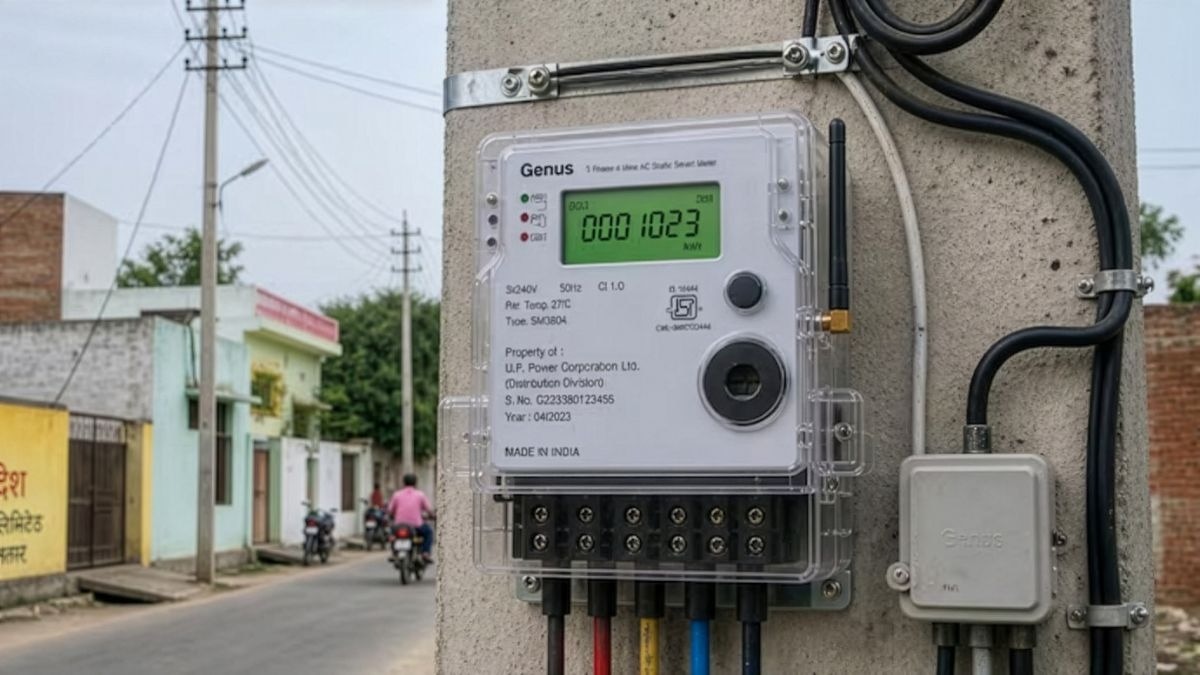
After months of protests and political pressure, the Uttar Pradesh government has effectively rolled back its controversial prepaid ‘smart’ electricity meter system. The government has announced that all smart meters would now function as postpaid connections instead of prepaid ones. Consumers will once again receive monthly bills and pay afterwards, much like the earlier system. The government has also paused the replacement of old meters with prepaid smart meters.
The decision is a major policy retreat for the Yogi Adityanath government, which had strongly defended the smart meter rollout and dismissed the criticism as politically motivated. The rollback came after protests spread across several districts over the past few weeks. In many places, consumers accused the system of inflated billing, unexplained deductions, sudden disconnections and lack of transparency. There were reports of angry residents removing meters and taking out demonstrations.
In a post on X, Uttar Pradesh energy minister A.K. Sharma said the government had decided to discontinue the prepaid arrangement “in public interest” because of the technical difficulties being faced by consumers.
Sharma mentioned that just as monthly bills were paid earlier, the bill for the period from 1st to 30th of the month would be sent via SMS or WhatsApp within the next 10 days. After receiving the bill, consumers can pay within the time limit. The department has also been directed that under no circumstances should electricity be disconnected within the month. For previous outstanding amounts, consumers will be provided the facility to pay in 10 instalments.
It is claimed that the idea behind smart prepaid meters was to improve billing efficiency, reduce electricity losses and ensure faster revenue collection. The government’s push was also linked to the Centre’s broader smart metering programme as the Central Electricity Authority’s 2022 regulations encouraged such reforms.
However, the rollout quickly ran into resistance on the ground. Many consumers complained that the prepaid system deducted money too quickly and made it difficult to understand how bills were being calculated. Others alleged that balances were reducing even when power consumption was low. Fears of automatic disconnection added to the frustration, especially in rural and lower-income areas where the electricity recharge culture is still unfamiliar.
The Opposition aggressively targeted the government over the issue. Samajwadi Party chief Akhilesh Yadav described the policy as a burden on ordinary people.
Initially, the BJP government pushed back strongly. Ministers accused the Opposition of spreading misinformation. However, the protests did not die down. The government first attempted a middle path. It temporarily stopped converting existing postpaid consumers into prepaid users and introduced several relief measures. These included grace periods before disconnection, limits on negative balances, mandatory SMS alerts and no power cuts on Sundays or holidays.
But the political pressure continued to build. A major turning point came when Union power minister Manohar Lal Khattar clarified in Parliament last month that prepaid smart meters were not mandatory. That weakened the argument that Uttar Pradesh had little choice but to implement the system aggressively.
Sources said the issue was discussed in detail during a recent cabinet meeting chaired by chief minister Yogi Adityanath. There were also indications that companies involved in manufacturing and installing the meters could face scrutiny.
Beyond technical concerns, politics clearly played a role in the government’s rethink. With the 2027 assembly elections approaching, the BJP could not afford to let a consumer issue turn into a statewide public grievance. Electricity bills directly affect households across caste, class and urban-rural lines, making it politically sensitive. The government also appeared conscious that the protests were beginning to create a broader perception problem. The Opposition had started portraying the prepaid system as an example of anti-people governance and alleged corruption.
After the rollback announcement, Akhilesh claimed victory and said public pressure had forced the “arrogant” government to back down. “This is a victory for people’s power. The aware public of UP will no longer tolerate the BJP’s tyranny and corruption. The bills that were inflated under the pretext of prepaid meters and collected from the public must be logically adjusted in the next bills. If AI can be used to remove names from voter lists, then why not for logical adjustment? The money taken from the public through electricity bills is the loot of BJP, which will have to be returned to the people. Otherwise, we will all come together for another new movement,” Akhilesh posted on X.
For now, Uttar Pradesh has not abandoned smart meters entirely. The technology remains, but the politically contentious prepaid model has been dropped.
Subscribe to India Today Magazine
– Ends