










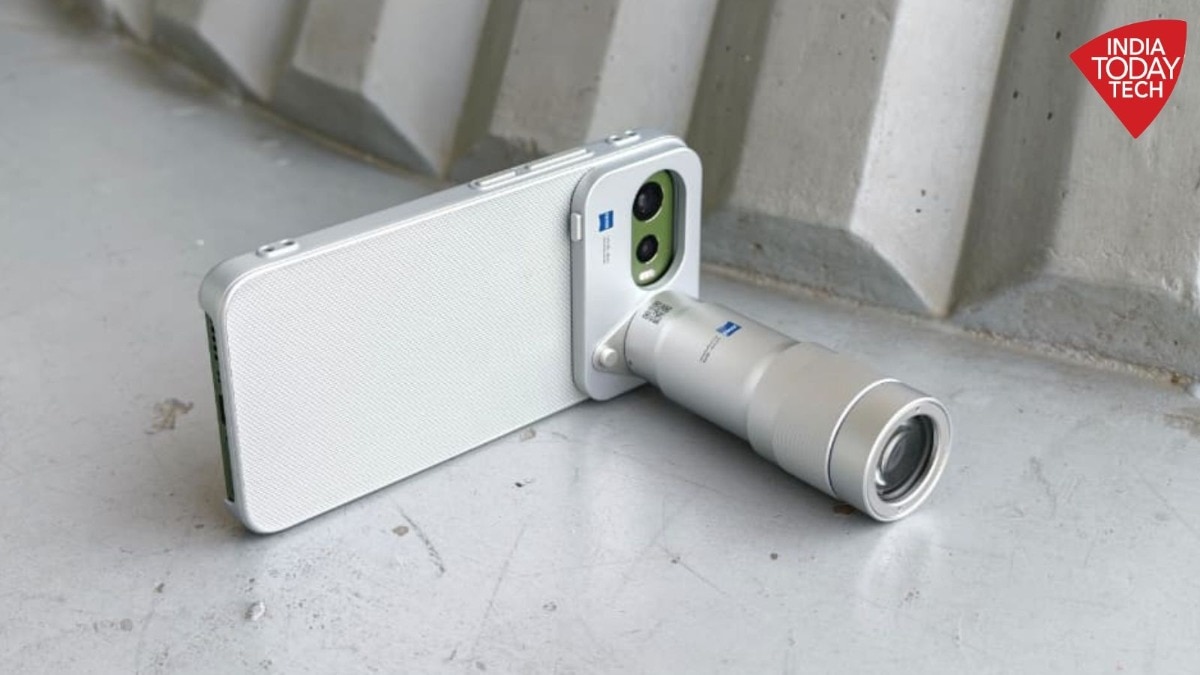
Vivo expanded its X300 series earlier with the standard X300 and X300 Pro, and the lineup has now grown further with the launch of the X300 FE alongside the X300 Ultra. The interesting part here is pricing. The X300 FE starts at Rs 79,999, which places it Rs 4,000 above the standard X300, despite the latter offering a more powerful flagship chipset and a higher-resolution main camera. Instead, Vivo is positioning the FE as a different kind of premium option, one that focuses on photography features and a more specialised user experience rather than raw specifications alone.
The biggest highlight of the X300 FE is support for Vivo’s Telephoto Extender Kit, a feature that was earlier limited to the X300 Pro. This gives buyers a chance to access long-range photography tools without stepping into the Rs 1 lakh price bracket. That said, the extender kit is sold separately, and adding it pushes the total cost close to Rs 90,000.
So, does the X300 FE justify its premium pricing? How good is the built-in camera system, how useful is the telephoto extender in real use, and does the phone deliver in gaming and everyday performance? We answer all of that in this review.
Camera performance
Since camera is one of the biggest reasons to consider the Vivo X300 FE, it makes sense to start here. If photography is high on your priority list and you want a reliable point-and-shoot smartphone camera, Vivo continues to be one of the strongest brands in this segment. Having used multiple Vivo X-series phones, the X300 FE carries forward the same confident experience. In daylight, you can simply point the camera and shoot without thinking too much about settings. Photos come out rich in detail, colours have a pleasant pop without looking exaggerated, and dynamic range is handled well. White balance remains accurate across most scenes, which helps images look natural rather than overly processed. In fact, many daylight shots are close enough to the standard X300 that most users would struggle to tell them apart at a glance.
What stood out to me most was shutter speed. The camera reacts quickly, which helped while taking photos of my niece as she kept moving instead of standing still. The phone managed several blur-free shots with good skin tones, sharp details and balanced colours. That is a good sign because many phones struggle with moving subjects indoors or in mixed light. As long as you are not shooting from too far away, the X300 FE can capture people in motion surprisingly well. Food shots also come out appealing, with lively colours and enough texture.
The 50-megapixel ultra-wide camera is also dependable. Colours remain fairly consistent with the main sensor, which was not always the case on older Vivo models. Detail levels are good enough for social media and everyday use, though edge sharpness can dip in some scenes and distortion is occasionally visible. It is still a useful camera for landscapes, architecture or group photos where fitting more into the frame matters more than pixel-level perfection.
The headline feature, however, is support for Vivo’s Telephoto Extender Kit. This add-on lens noticeably improves long-range shots compared to using the phone’s built-in zoom alone. With the kit, you get 200mm, 400mm, 800mm, and 1600mm presets, with digital zoom up to 5400mm. Without the kit, the phone offers standard 3x optical zoom and up to 100x digital zoom. The 200mm mode is roughly 8x equivalent. The viewfinder shows 0.6x (15mm), 1x (23mm), 2x (46mm), and 3x (73mm) options.
Images captured with the kit look sharper, brighter and retain better details with stronger colour consistency. It is especially useful for wildlife, street photography, concerts or subjects that are difficult to approach. But the image quality depends heavily on available light around both the camera and the subject.
I used it for bird photography because birds often fly away when you get too close. The telephoto kit helped me capture a few excellent shots with good colours, details, and sharpness. However, this works best when photographing subjects that are visible to your eyes.
For example, I clicked a photo of a garden where kids were playing near slides and a few people were sitting in the distance. While the scene itself was visible, the people sitting farther away were not clearly noticeable to the naked eye. The telephoto kit was able to capture those distant details, but faces were not very clear. So it can bring distant scenes closer, but if the subject is extremely far away, facial details can still look soft. This is where higher-end models like the X300 Ultra hold an advantage with stronger long-range hardware. The X300 FE gives users a more affordable route into extended zoom photography, but it does not fully replace a true flagship zoom system.
Without the kit attached, the phone uses its 50-megapixel telephoto camera with 3x optical zoom, and this sensor performs well on its own. It delivers sharp portraits, controlled noise and natural colours. Portrait photography remains one of Vivo’s strengths, and the X300 FE continues that trend. Subject separation is accurate, skin tones look realistic, and clothing textures are well preserved. I also like how well the bokeh effect works on the FE model. In one shot, for example, two people were standing back to back, and the phone applied an almost perfect blur to the person in the background while keeping the main subject in sharp focus. This created a dramatic-looking image. The background blur was natural and not overly aggressive, which helped preserve the emotion of the scene.
That said, I felt the main subject could have looked a little sharper with slightly better detail. I used the Edit tool in the Gallery app to add some sharpness, and the result looked even better. However, the sharpening effect was also applied to the background subject. I do hope phones eventually offer an AI-based selective sharpening tool that lets users enhance only specific parts of an image for a quicker and cleaner fix.
There were rare occasions where portrait shots looked a little dull, mostly in low-light situations, but the camera’s post-processing remains strong in most scenarios. The phone also offers handy quick-edit tools in the Gallery app, which I used to improve one image noticeably.
What I continue to admire about the Vivo X series is the level of detail it can capture in close-range portraits. For example, in a portrait shot of a child, the hair strands were captured beautifully, with highlights and multiple shades of black rendered accurately, without unnecessarily blurring any part of the head. Skin tones looked natural, even details like dry lips were visible, and the clothes remained in focus with textures, colours, and sharpness mostly on point. Exposure was also well balanced.
Click on any photo below to access all the camera samples
Minor compromises begin to show when portraits are taken from a certain distance, where details start to look a little hazy and softer. They still look good at a glance and are perfectly usable for Instagram, but zooming in reveals reduced sharpness and softer textures.
The front 50-megapixel selfie camera is another strong point. Autofocus helps keep faces crisp, skin tones natural and edge detection clean in portrait mode. It is easily among the better selfie cameras in this price segment.
Low-light photography is solid, though not flawless. The X300 FE can capture pleasing night shots with lively colours, controlled noise and good scene retention even in challenging lighting. Lens flare is mostly controlled and detail levels are respectable. However, while low-light performance is good overall, it still does not feel as consistently impressive as the phone’s daylight camera performance. Vivo has done a good job here, but there is still room for improvement.
Overall, the Vivo X300 FE offers one of the most versatile camera experiences in its class. Strong daylight photos, excellent portraits, dependable selfies and the unique Telephoto Extender Kit make it stand out. If camera versatility matters more to you than benchmark numbers, this is where the X300 FE makes its strongest case.
Design
The “FE” in Vivo X300 FE stands for Fashion Edition, and that focus is clear the moment you pick up the phone. I received the Urban Olive colour variant for review, and it is one of the more refreshing finishes seen in this segment. Instead of going for a loud or flashy look, Vivo has chosen a subtle premium tone that stands out without demanding attention. It feels tasteful, modern and different from the usual black, silver or blue options that dominate the market.
The phone uses a glass back with a matte finish paired with metal frames, which immediately adds to the in-hand feel. It looks premium and feels solid, while the matte coating also helps reduce fingerprints. The flat frame design with softly curved edges works well in daily use, as it does not dig into the palm and offers a more secure grip than sharper flat-edged phones.
At the back, Vivo has gone with an oval-shaped camera module placed near the top. It gives the X300 FE a distinct identity and separates it visually from both the older X200 FE and the rest of the X300 lineup. The module does protrude a little, but it doesn’t make the phone wobble much on a flat surface.
One of the more impressive aspects here is how Vivo has balanced size and battery capacity. The X300 FE weighs 191g and measures 7.99mm thick, which is reasonable considering it houses a large 6,400mAh battery. It does not feel overly bulky or top-heavy, and the weight distribution is well managed for comfortable everyday use.
The metallic side frame adds rigidity, while the matte rear panel keeps the device feeling refined. Without a case, some users may still find it slightly slippery, especially because of the smooth finish, but it remains comfortable to hold for long periods. Vivo has also included IP69 dust and water resistance, adding an extra layer of durability that is always welcome in a premium smartphone.
Overall, the X300 FE gets the basics right when it comes to the design department.
Display
The Vivo X300 FE features the same 6.31-inch display size as the standard X300, making it a compact option in a market where most premium phones continue to get larger. If you prefer a device that is easier to use with one hand without sacrificing screen quality, this size strikes a practical balance between usability and immersion.
On the front, you get a 6.31-inch 8T LTPO AMOLED panel with a 2640 x 1216 resolution, 120Hz refresh rate, and 10-bit colour support. It is a sharp, vibrant display with excellent contrast levels, making it well suited for everything from everyday browsing to gaming and media consumption. Text looks crisp, colours appear rich without being excessive, and black levels are as deep as you would expect from a quality AMOLED panel.
Brightness is another strong area. Vivo claims a peak brightness of 5000 nits and 1800 nits in High Brightness Mode, and in real-world use the screen remains comfortably visible outdoors. Under direct sunlight, content stays readable, colours do not wash out easily, and the display maintains good punch. It is one of the better compact phone screens for outdoor visibility.
The panel also supports HDR10+, with HDR playback available on platforms like Netflix and YouTube. Watching supported content is a pleasing experience thanks to the strong contrast, vivid colours and solid brightness levels.
Daily use is equally impressive. Scrolling through apps feels fluid, animations look smooth, and touch response is quick and accurate. I did not notice any odd colour shifting, graininess or uneven brightness issues during testing. What stands out is Vivo’s LTPO implementation. The refresh rate adjusts smoothly based on usage, saving battery on static content and rising to 120Hz while scrolling. It works better than what we usually see on most phones.
Performance
The Vivo X300 FE is powered by Qualcomm’s mid-range Snapdragon 8 Gen 5 chipset. It does not sit at the very top of the company’s lineup like the standard X300 or X300 Ultra which offer the top-end flagship chipsets, but it still delivers a premium-level experience with enough power for demanding users. In day-to-day use, the phone feels fast, responsive and consistently smooth. Apps open quickly, multitasking is handled well, and general navigation remains fluid. For most users, there will be little to complain about in everyday performance.
Benchmark numbers also paint a strong picture.
-On AnTuTu (which measures overall system performance), the X300 FE scored around 2.8 million, a notable jump over the older X200 FE’s 1.9 million.
-In Geekbench (which focuses on peak CPU speed), the phone returned a score of 8,745, suggesting strong short-burst processing power for tasks such as app launches, browsing, image processing and general responsiveness.
-I also ran the 3DMark Wild Life Extreme Stress Test for testing the phone’s GPU performance. It recorded a Best Loop Score of 4090 with around 64 per cent stability. In simple terms, this means the X300 FE can deliver strong peak graphics performance when cool, but performance drops once heat builds up during repeated stress. Its Lowest Loop Score of around 2649 confirms that thermal throttling does come into play during sustained heavy loads. So, while the phone starts strong, it does not maintain that same level of output indefinitely.
-The CPU Throttle Test (which is for testing sustained CPU Speed) showed close to 59 per cent performance reduction under continuous load. This suggests the processor lowers performance noticeably over time to manage temperatures and power draw. That may sound aggressive on paper, but it is not unusual for slim premium phones balancing performance with heat control. In regular use, most people are unlikely to notice this behaviour. It becomes more relevant during long gaming sessions, extended video exports or continuous heavy multitasking.
My real-world gaming experience showed these results. I played Genshin Impact for roughly two and a half hours straight. With the game set to 60fps and medium graphics, the phone handled gameplay well for about the first hour before frame drops and occasional lag started to appear as temperatures rose. The back panel also became warm during the session. This is not entirely surprising, as Genshin Impact remains one of the most demanding mobile games, known for stressing both CPU and GPU resources with its open world, detailed environments and real-time effects.
Reducing settings to 30fps with lower graphics delivered a smoother and more stable experience for longer sessions. Lighter titles and competitive games such as BGMI are naturally less of a challenge and run more comfortably.
Overall, the Vivo X300 FE offers strong performance with flagship-like speed in daily use and capable gaming performance, but it is not built as an all-out gaming phone. It excels in short to medium gaming sessions, while sustained heavy workloads reveal thermal limits. If top-tier gaming is your main priority, the standard X300 or X300 Ultra remain better choices.
Battery
Apart from its telephoto advantage, the Vivo X300 FE also gets a bigger battery than the standard X300. It packs a large 6,500mAh cell, which is impressive considering the phone’s compact form factor. Charging is equally strong, with support for 90W wired charging, so topping up does not take long.
With my usual routine of web browsing, chatting, social media scrolling, clicking photos, some gaming and light streaming, the phone comfortably delivered around 9-10 hours of use. It is a reliable all-day device and can even stretch beyond that for lighter users.
Gaming battery drain is also well controlled. During long sessions of Genshin Impact, the phone consumed only around 10 per cent battery over an extended stretch, which suggests solid optimisation between the chipset, software and battery management.
Verdict: Should you buy X300 FE?
The Vivo X300 FE is not the easiest phone to recommend purely on value, because at Rs 79,999 it sits in a tricky position. The standard X300 costs less and offers a more powerful chipset, while other rivals in this range may give you stronger raw performance. If gaming benchmarks and maximum sustained power are your top priorities, the X300 FE is not the smartest buy.
However, this phone is not trying to win on specs alone. It makes its case through a different kind of premium experience. You get a compact and premium design, an excellent LTPO AMOLED display, dependable all-day battery life, fast charging, and most importantly, a very strong camera system. Vivo’s image processing remains one of the best in the segment, especially for daylight photography, portraits and selfies. The added support for the Telephoto Extender Kit also gives the X300 FE a unique edge for users who enjoy zoom photography and want something different from typical flagship cameras.
So, should you buy it? If you want the best value or strongest gaming performance and excellent camera without kit support, the Vivo X300 is a better option at the current pricing. But if you want a similar experience with an additional telephoto kit for better zooming quality, the X300 FE becomes a much stronger proposition. It is a niche flagship with decent gaming performance, but for the right buyer, it makes sense. Do keep in mind that the kit will bring the price closer to the Rs 1 lakh segment, making it very expensive for many.
– Ends