







Three regional rulers fell across India in one weekend in May. The Bharatiya Janata Party won 207 of 293 declared seats in West Bengal on Monday, ending the All India Trinamool Congress’s 15-year run in power. The BJP took 46 per cent of the state’s vote and won more than two-thirds of the Assembly’s seats, the largest shift the state has recorded in a quarter of a century.
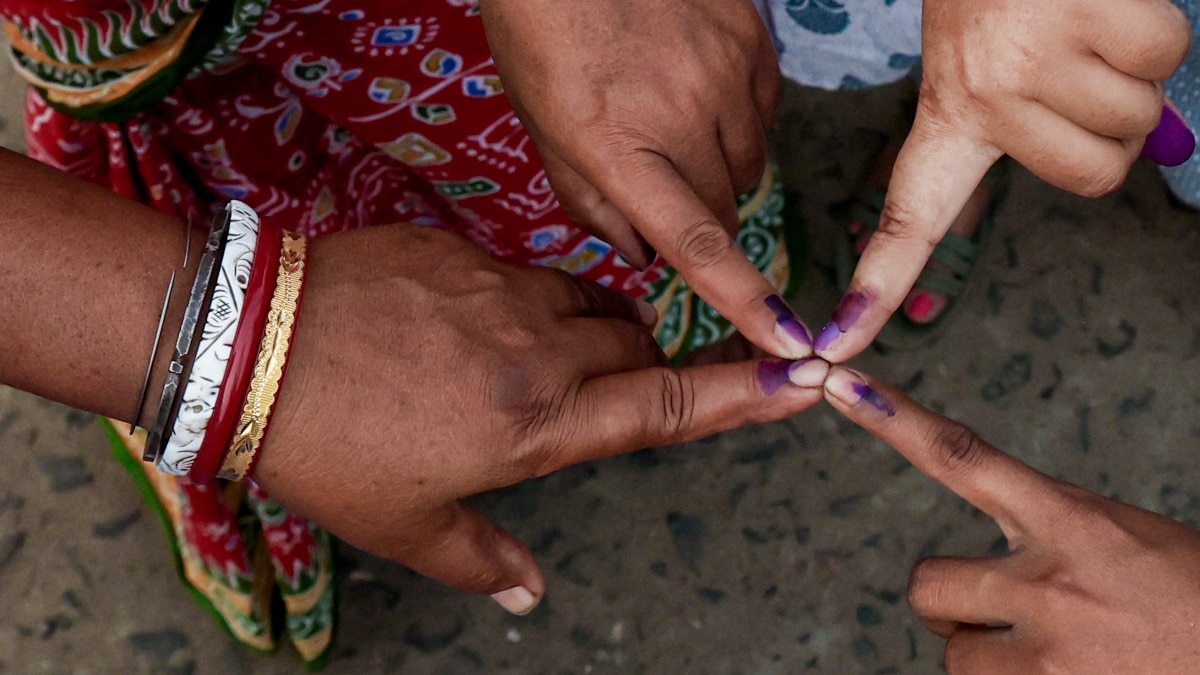
The Bengal result came after the Election Commission of India removed nearly 7.9 million names, about one in 10 voters, from the state’s rolls in the months before the election. Banerjee called the cleanup deliberate disenfranchisement of her supporters. The BJP dismissed her allegation as a public mandate she could not accept. A seat-by-seat analysis of the deletions suggests both sides have a piece of the story, and neither has the whole.
The same weekend brought two more regional rulers down. In Tamil Nadu, the newly formed the Tamilaga Vettri Kazhagam, founded in February 2024 by movie star Vijay, polled 35 per cent in its first contest and unseated MK Stalin’s Dravida Munnetra Kazhagam.
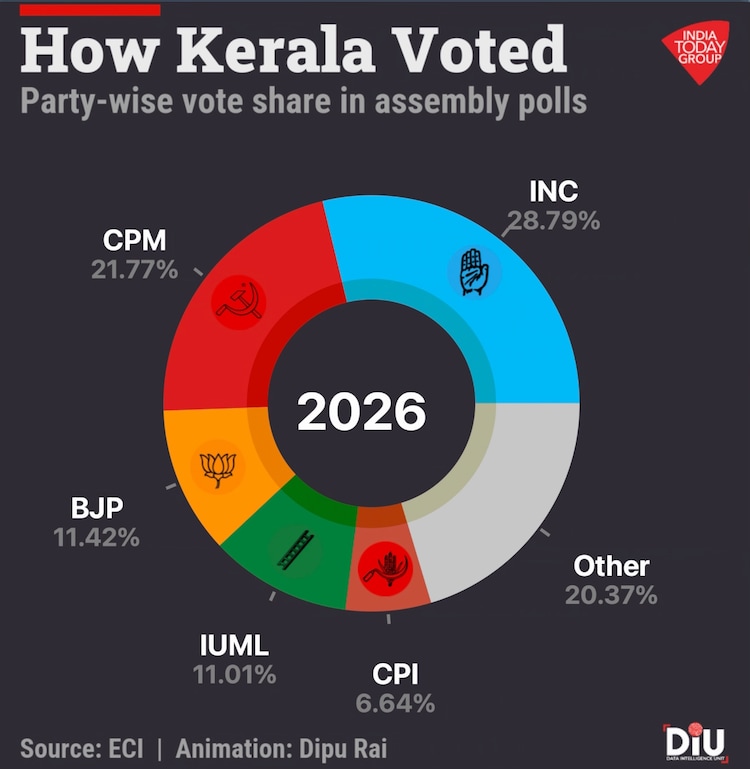
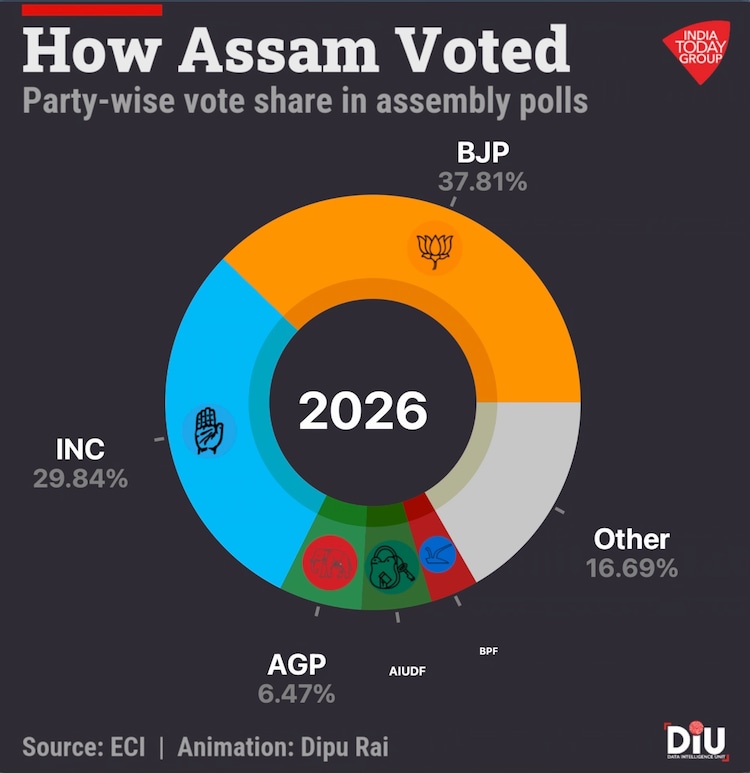
In Kerala, the Communist Party of India (Marxist)-led government fell to a Congress-led coalition for the first time in a decade. In neighbouring Assam, the BJP won a third consecutive term with 38 per cent of the vote.
West Bengal: A 25-year build
In West Bengal, the scale of the BJP’s win exposed how many voters were ready for change. BJP polled 46 per cent, eclipsing the TMC’s 41 per cent, and translating into 207 of the state’s 293 declared seats. The party had taken just five per cent in 2001, when Banerjee herself polled 31 per cent. The CPI(M) finished at four per cent. The Indian National Congress fell to three per cent.
West Bengal is the prize that eluded the BJP through every previous national wave. The state’s size, 100 million people and 42 Lok Sabha seats, make it electorally consequential at the national level. The BJP took Tripura in 2018 and Odisha in 2024. Bengal closes the eastern map.
Tamil Nadu: A stunning debut
The Tamil Nadu result is the cycle’s biggest surprise. The TVK, founded in February 2024, polled nearly 35 per cent in its first contest. The DMK, which had held the state since 2021, fell to around 24 per cent. The All India Anna Dravida Munnetra Kazhagam, the other Dravidian power, slipped to about 21 per cent. The BJP and the Congress finished at about three per cent each.
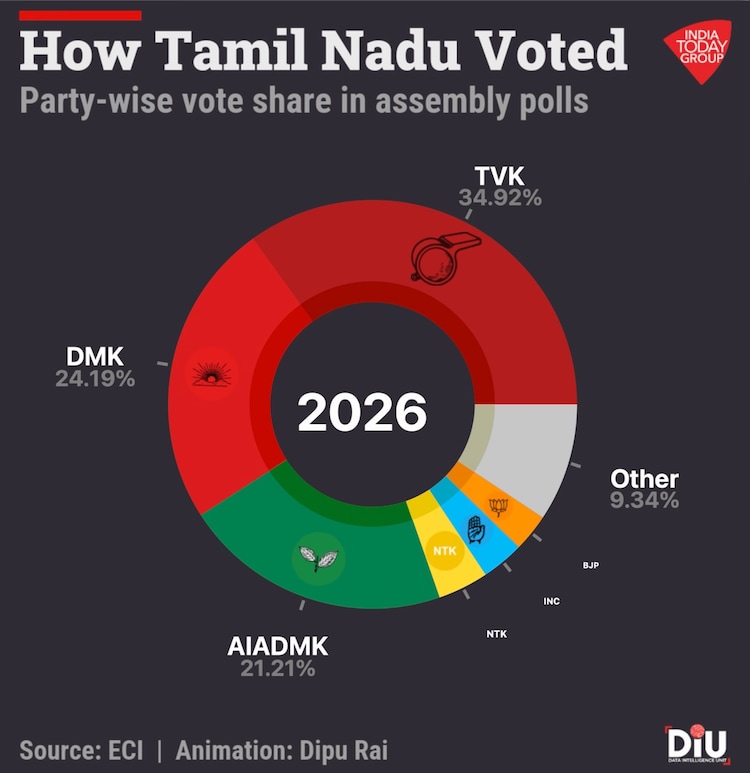
Vijay, who left film for politics in early 2024, did not win an outright majority. But the gap between TVK and the majority is small enough that subsequent defections, post-poll alliances, or by-election outcomes could close it.

Kerala: LDF fortress falls
The Congress polled 29 per cent in Kerala, overtaking the CPI(M) at 22 per cent. The Indian Union Muslim League and the BJP rose to 11 per cent each, the first time both have been within a percentage point of each other in a Kerala Assembly. The Left Democratic Front had been running the state since 2016. After this cycle, the Congress-led United Democratic Front returns to power.
Assam: A steady wave
Assam was the most predictable result of the four. The BJP polled about 38 per cent, the third consecutive cycle in which the party has been the largest single force in the state. The Congress finished at nearly 30 per cent, the AGP at about six per cent, and the All India United Democratic Front at about five per cent. The BJP’s vote share has risen 28 points since 2001.
The complication: 7.9 million names
The voter-roll cleanup is the part of the story neither side wants to talk about plainly. “I haven’t lost,” Banerjee told reporters in Kolkata on Tuesday. She said her supporters had been struck from the rolls before they could vote. Senior Congress leader Rahul Gandhi and Samajwadi Party chief Akhilesh Yadav echoed her allegations.
The Election Commission says the 7.9 million removals were routine: deceased voters, duplicate registrations, and addresses where the voter no longer lives. The BJP says the result is a public mandate. Both can be true at once. Reporting on the seat-by-seat data suggests the deletions were not random, but tying their pattern to deliberate intent is harder than the political claims allow.
The same forces have been moving against Banerjee for years. The BJP’s vote share in Bengal rose from four per cent in 2011 to over 10 per cent in 2016, then to around 38 per cent in 2021, and to 46 per cent in 2026.
The biggest single jump came between 2016 and 2021, well before the voter-roll cleanup. The cleanup may have made the 2026 swing larger. It did not create the swing.
What 2026 means for regional opposition
The 2026 cycle is the deepest erosion of India’s regional party system since 2014, when the BJP first surged at the national level. The pattern has held through three general elections and now at the state level in three of the country’s most-watched assemblies.
If the BJP consolidates its gains in the 2027 polls in Uttar Pradesh and Gujarat, the regional opposition becomes a smaller, more fragmented force in the union. If the voter-roll question reaches the courts and outlasts the political cycle, the BJP’s mandate could be challenged on procedural grounds. Both are possible. Neither is certain.
– Ends