







As West Bengal votes, its remote villages are witnessing a rare and emotional homecoming. Thousands of migrant workers, scattered across industrial sites, construction hubs and informal labour markets in distant states, have returned to cast their ballots. For a brief moment, homes that had fallen silent echo again with voices, ferry ghats grow crowded, and narrow village paths bustle with life, as the fate of netas and political parties in West Bengal will be sealed by the voters on April 29th during the second phase.
But beneath this visible surge of return lies a quieter, harsher truth, this migration is temporary. Once the voting ends, the same workers will leave again, pulled back by the compulsion to earn a livelihood that their home districts cannot provide.
In the Sunderbans, where land and water constantly negotiate space, this cycle of departure and return has become a way of life.
At Goranbose-4 village in Basanti assembly constituency, 25-year-old Arijit Mondol’s journey home reflects both urgency and sacrifice. A drilling labourer working on oil pipeline projects in Gujarat, Mondol returned despite not being paid for three months. His employer, he claims, withheld wages to prevent workers from leaving.
“We borrowed money from home and came back. If we didn’t, we couldn’t vote,” he says.
His journey was uncertain, unreserved travel, financial strain, and the risk of losing his job. But beyond economics, his story carries deeper emotional scars. Mondol speaks of a fractured family life shaped by migration. His wife left him years ago, and he believes his prolonged absence played a role.
“I wanted to come back when things went wrong at home, but I had no money and no leave. I kept crying for days,” he recalls. “If I had stayed, maybe my family would still be together.”
For Mondol and his father, who works alongside him, daily life at the worksite is harsh and precarious. Their job involves drilling the ground, waiting for controlled blasts, and repeating the process in isolated locations. They live in temporary tents, vulnerable to strong winds and extreme weather.
Back in the village, however, the challenges are different but equally severe.
Across Goranbose and neighbouring settlements, migration is deeply embedded in the social fabric. Almost every second household has at least one member working outside the state, in Gujarat, Tamil Nadu, Kerala or Telangana. Over time, this has even created a network of local agents who facilitate migration, connecting workers with contractors in return for commissions.
The reasons for leaving are straightforward yet relentless. Employment within the village is limited to a few months of agricultural or informal work each year. For the remaining period, opportunities are scarce, wages are low, and uncertainty looms large.
“Here, you may get work for three months. After that, nothing is certain,” a local resident explains.
For many, migration is not a choice but a necessity to sustain their families.
Shabeer Molla, a 31-year-old embroidery worker, recently returned from Surat in Gujarat. He describes not just economic hardship but also social vulnerability. “We were being targeted because we are Bengalis,” he says, adding that his employer advised workers to return home temporarily.
“ I want to request the Prime Minister, Bengalis shouldn’t be attacked in other states like workers from Bihar, Uttar Pradesh get safe environment in West Bengal.” he appealed.
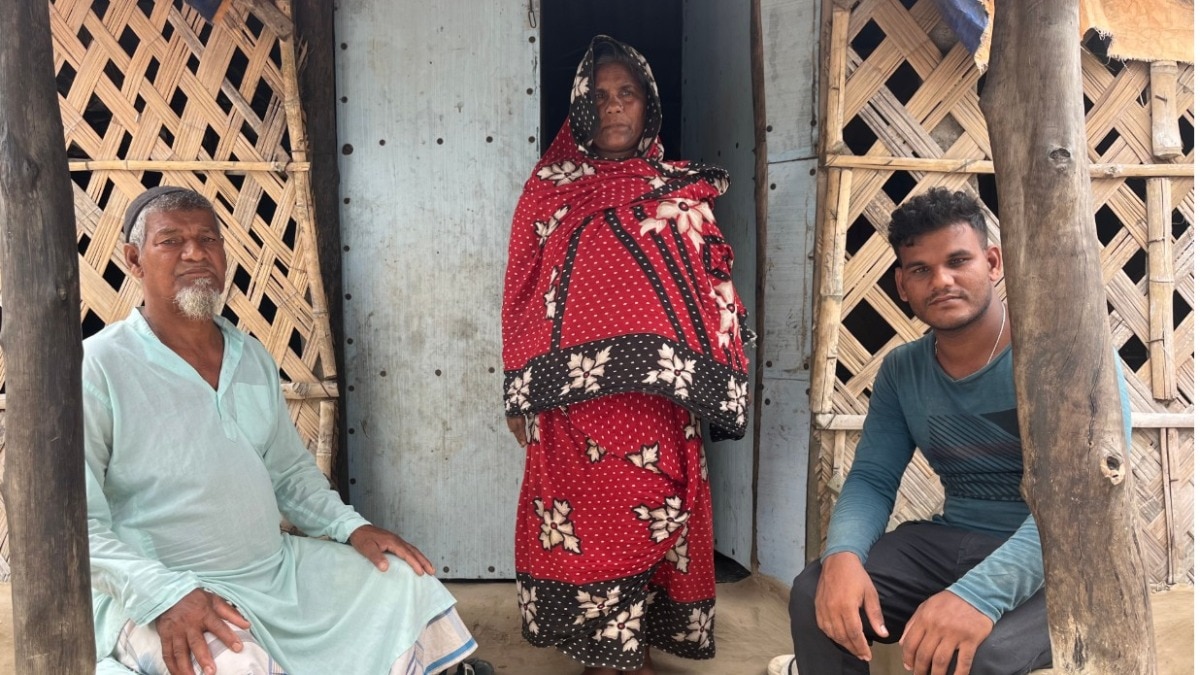
Molla’s house in the Sunderbans is modest, a two-room structure made of bamboo and mud, but it offers something his workplace cannot: dignity and belonging. In Surat, he shares cramped accommodation with nearly 30 workers.
“Still, I have to go back,” he says. “I spend around Rs 5000 there and send Rs 10000 home. That’s how my family survives.”
The Sunderbans, despite their natural beauty, present their own set of hardships. Frequent cyclones, heavy rainfall and flooding disrupt lives regularly. Entire villages can be inundated, homes destroyed, and livelihoods wiped out overnight.
Families here recall the devastation of the 2009 cyclone, when large parts of the region were submerged, livestock perished, and lives were lost. Even today, reaching the villages during emergencies can take days due to poor connectivity.
These environmental vulnerabilities further push residents to seek stability outside.
At Gotkhali ferry port, the gateway to the Sunderbans, the scale of migration becomes visible. Long queues of workers, carrying small bags and essentials, board ferries to reach their villages. Many have travelled for over 16 hours in overcrowded trains, often without reserved seats.
Among them is Shiv Ranjan Sarkar, a jewellery polisher who has been working in Mumbai for eight years. For him, the emotional cost of migration is as significant as the physical hardship.
“When I return from work in Mumbai, there is no one waiting for me. Here, my family is with me,” he says. “There is peace in the village, but no work.”
Sarkar’s return ticket is already booked. Like many others, his stay is brief, just enough to vote and reconnect before leaving again.
Another worker, Maithi Mondol, recounts his journey sitting on the floor near a train toilet for hours. His words capture the stark reality of limited choices: “There is no employment here. What option do we have?”
This election has been described by many migrants as an “emergency vote.” Word had spread among workers that failing to vote could lead to losing voting rights or raising questions about citizenship. Whether rooted in fact or fear, this perception triggered a mass return.
Yet, the structural issues remain unchanged.
According to estimates, over 20 lakh voters in West Bengal are migrant workers. Districts like South 24 Parganas, Murshidabad, Malda and parts of North Bengal consistently see high levels of out-migration due to lack of local employment and low wage levels.
While political parties compete for electoral victory, the lived reality of these workers cuts across party lines. Regardless of who forms the government, their immediate future is already decided—they will return to worksites far from home.
In the Sunderbans, this contradiction is particularly stark. Surrounded by lush greenery, rivers and mangroves, the region appears abundant. Yet, beneath this natural wealth lies deep economic fragility.
For migrant workers, the village represents emotional security, community support, and a sense of belonging. But survival demands something else, steady income, which remains out of reach locally.
As polling concludes and counting day approaches, the ferries at Gotkhali will soon witness the reverse movement. The same workers who arrived with hope and urgency will leave with quiet resignation.
Their votes will stay behind, shaping the political future of the state. But their lives will once again unfold elsewhere, in construction sites, factories, and remote project locations across the country.
In this recurring journey between home and work, one truth persists: for Bengal’s migrant workers, the road home is always temporary.
Elections 2026 | West Bengal Election | West Bengal Election Constituencies | West Bengal Election Schedule
– Ends