







On April 29, during the second phase of the West Bengal Assembly elections, there are three key things to watch out for:
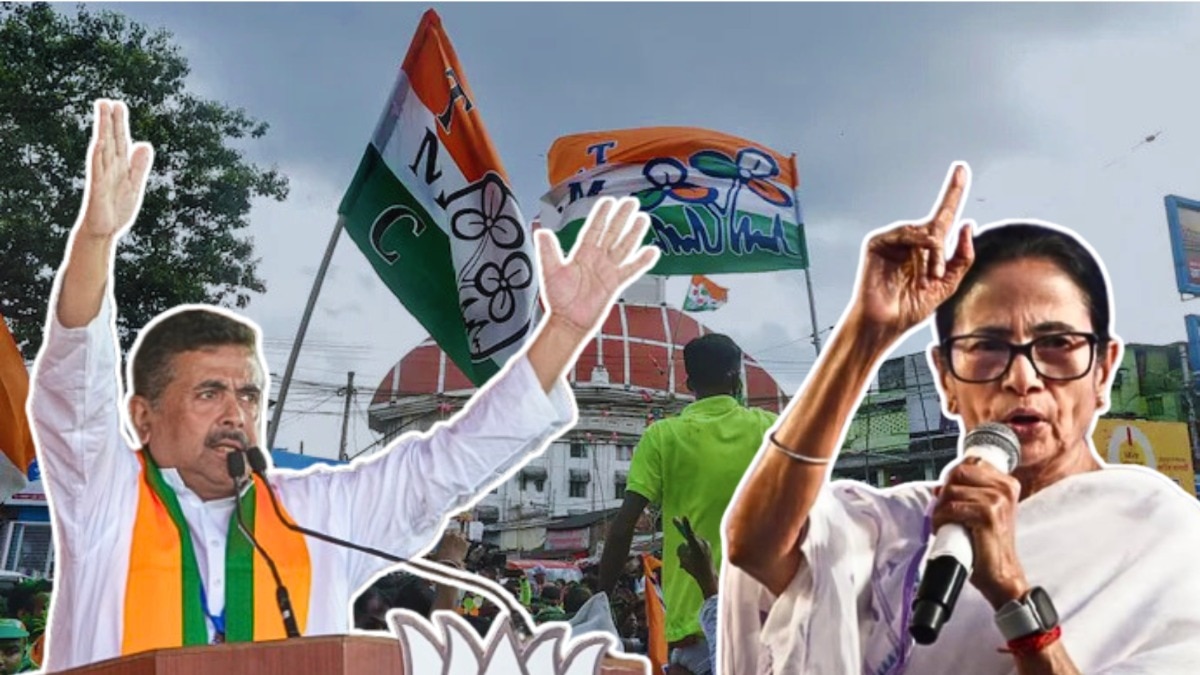
- The Bhabanipur rematch: Mamata Banerjee will meet Suvendu Adhikari on her own seat, five years after he beat her at Nandigram
- A new turnout ceiling to chase: Bengal hit 93.2 per cent in Phase 1 on April 23, its highest turnout since Independence. Phase 2 districts have not crossed 90 per cent in any cycle since 2011
- Ten knife-edge seats: A combined margin of just 53,737 votes separated the closest 10 winners from their challengers in 2021. The TMC holds six, the BJP four
Chief Minister Mamata Banerjee returns to Bhabanipur on Wednesday to face Suvendu Adhikari, the Bharatiya Janata Party leader who beat her at Nandigram in 2021 and now challenges her in her own seat.
Banerjee is one of 1,448 candidates contesting 142 seats in the second and final phase of the West Bengal Assembly election. About 3.22 crore voters are eligible at 41,001 polling stations across seven South Bengal districts, including Kolkata.
The phase carries two early questions. The first is whether voter participation can match the 93.2 per cent that Phase 1 set on April 23, the highest in West Bengal since Independence, beating the 84.7 per cent recorded in 2011. The second is whether the four-percentage-point cushion that separated the closest 2021 winners from their challengers will hold in seats where the Trinamool Congress and the BJP traded narrow leads.
The crowded ballots set the scene. Bhangar in South 24 Parganas has the longest list at 19 candidates. Kolkata Port has 14, Behala Paschim 14, and Entally 15. The state average works out to 10.2 candidates per seat. The seats that decide Phase 2 will be picked from these long lists, and the closest 2021 races were decided by the slimmest of pluralities.
The closest fights
The closest race in Phase 2 geography last time was in Bangaon Dakshin in North 24 Parganas. Swapan Majumder of the BJP won by 2,004 votes out of 2.08 lakh cast, a margin of 0.96 percentage points. He is now up against Rituparna Addhya of the TMC and Asish Sarkar of the Communist Party of India (Marxist).
Kalyani in Nadia was the next closest: BJP’s Ambika Roy won by 2,206 votes, again three-cornered, again within the swing of any local issue. Senior TMC minister Jyotipriya Mallick is back at Habra defending a 3,841-vote lead from 2021, among the most fragile cushions any cabinet incumbent carries into Phase 2.
The combined victory margin across the top 10 closest 2021 contests in Phase-2 geography was 53,737 votes, fewer than the electorate of half a constituency. The TMC defends six of those leads, the BJP four. No party crossed 50 per cent vote share in any of them.
The marquee fight is in Bhabanipur in Kolkata. The seat was held by Sobhandeb Chattopadhyay for the TMC in May 2021 with a margin of 28,719 votes. Banerjee took it later that year in a by-election after losing Nandigram.
In 2026, she meets Adhikari, the man who beat her there, in a head-to-head rematch on her own seat. Adhikari also defended Nandigram in Phase 1, a multi-AC filing the BJP has not commented on publicly.
The Phase 2 baseline matters because geography has been the laggard, not the leader, in past cycles. Average turnout across the 142 seats slipped from 83.9 per cent in 2011 to 80.9 per cent in 2021. Kolkata fell most sharply, from 65.6 per cent to 60.41 per cent.
North 24 Parganas dropped 4.8 points across the same period. Barddhaman remains the highest-participation district at 86.2 per cent, Kolkata the lowest by a wide margin.
Smaller roll, bigger turnout
The April 29 vote will not be measured against 2021 alone. The Election Commission’s electoral roll for these 142 seats stands at 3.22 crore, about 34 lakh fewer than in 2021 (3.56 crore). That is a contraction of 9.6 per cent, the steepest of any 2026 polling cycle so far. Tamil Nadu’s roll shrank 8.8 per cent, and Phase 1 West Bengal shrank 4.8 per cent, according to the commission’s press notes for those rounds.
A simple reading of the gap as voter deletions misses the underlying math. The net change is the residual of three flows over five years: new voters added at age 18, voters removed for deaths and ordinary migration, and any deletions made during the Special Intensive Revision that the commission has been running. The SIR-specific share cannot be isolated without ECI’s per-reason audit data, which has not been published.
What did happen in Phase 1 is that the smaller roll did not depress the absolute vote count. About 19.8 lakh more voters cast ballots in Phase 1 than in the same 152 seats in 2021, even with an electorate that had shrunk by 18.2 lakh. The headline 9.7 percentage point jump in Phase 1 turnout was real engagement layered on top of a smaller denominator, not a denominator artefact alone.
What’s at stake
If South Bengal follows the Phase 1 pattern, the headline turnout figure for Phase 2 could clear 90 per cent, pushing further past the 84.7 per cent record set in the 2011 election. The Phase 2 districts have not crossed 90 per cent in any cycle since 2011, with the highest district average at 89.7 per cent in Barddhaman that year.
The closer fights are the ones to watch on counting day. With the TMC defending six of the 10 narrowest 2021 leads and the BJP defending four, a swing of two percentage points in either direction would flip a portion of the slate. The seats are clustered in Hugli, North 24 Parganas, Nadia, and Barddhaman, which together carry 84 of the 142 seats voting on Wednesday.
In 2021, Mamata Banerjee lost the seat she chose to fight. She returns to the ballot on Wednesday in the seat she fell back on, against the same opponent.
Note: The 9.6 per cent contraction in the Phase 2 electoral roll is a net change across five years, not a single-cause deletion figure. The SIR share cannot be isolated without ECI’s per-reason audit numbers.
– Ends