









The crowds, the slogans, the posters on every pole — elections in India feel like a festival. They are loud and visible with long campaigns, and impossible to ignore. With every new state poll, the scale only grows bigger.
Now imagine the opposite.
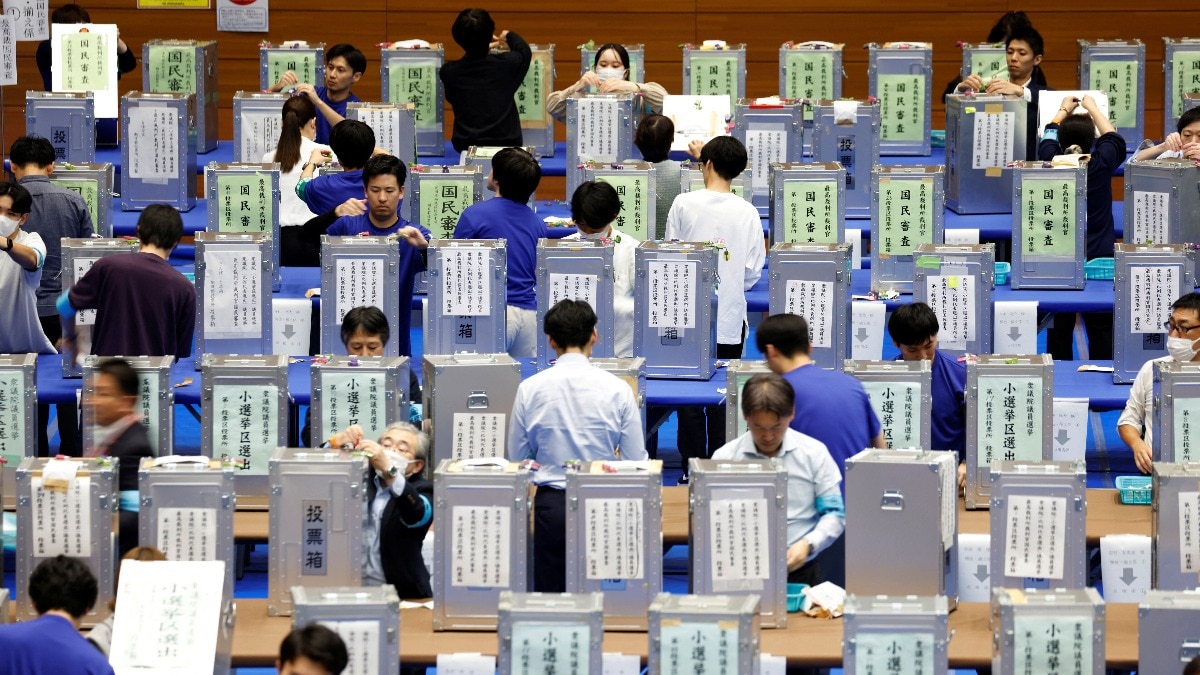
In Japan, voters elect members to a national parliament called the Diet, which then chooses the Prime Minister, while local governors and mayors run regions and cities. Campaigns are short, tightly regulated, and far quieter.
What if elections were like this, over in just 12 days?
Here are the rules surrounding elections in Japan:
ONLY 12 DAYS OF CAMPAIGNING
In Japan, election campaigns are short and fixed. Candidates usually get around 12 days to reach voters before polling. There are no months of rallies or extended build-up.
This forces campaigns to stay focused. Candidates prioritise direct messaging instead of stretching their presence endlessly.
It also reduces fatigue for voters, who are not constantly exposed to political messaging.
NO DOOR-TO-DOOR OR AGGRESSIVE CANVASSING
One of the biggest surprises for many is this. Candidates cannot go knocking on doors asking for votes. Door-to-door canvassing is restricted under Japan’s Public Offices Election Law.
Instead, candidates rely on scheduled speeches, pamphlets, and limited public appearances. The idea is simple. Voting should be influenced by information, not pressure or personal persuasion at home.
POSTERS ONLY ON DESIGNATED BOARDS
Walk through a Japanese city during elections and you will not find posters pasted randomly on walls or electric poles. That is illegal.
Each constituency has official boards with numbered slots. Every candidate is assigned a space and must display their poster there only. It keeps public spaces clean and ensures equal visibility for all candidates.
NO TV ADS AND CONTROLLED PUBLICITY
Unlike many countries, television advertising for election campaigns is largely restricted. Candidates cannot flood screens with political ads.
Publicity is limited to specific formats like officially approved posters, leaflets, and short broadcasts. This creates a more level playing field, where visibility is not entirely dependent on money.
STRICT RULES ON RELIGION AND SPEECH
Campaign speeches in Japan are tightly monitored. If a candidate uses religion to seek votes or tries to divide voters on religious lines, it can lead to disqualification.
The system aims to keep elections secular and policy-focused. Identity-based mobilisation, which often dominates politics elsewhere, is kept under check.
STRICT SPENDING AND FULL TRANSPARENCY
Money in elections is tightly controlled.
There are strict caps on how much a candidate can spend. More importantly, political donations are publicly disclosed. Voters can see who funded which party and by how much.
The focus shifts from financial power to credibility and work. Campaigns become less about scale and more about substance.
SMALL CAMPAIGNS, BIG IDEA
Instead of massive rallies, candidates often use small vans fitted with loudspeakers. They move through neighbourhoods, make short speeches, and leave.
No huge stage, no grand spectacle. The philosophy is clear. Elections are about choosing a representative, not showcasing power.
It raises an interesting thought.
If such rules existed in India, the visual of elections would look very different. There would likely be fewer rallies, fewer posters, and less noise. There would be more focus on candidates, and less on spectacle.
Japan’s system is not perfect, and turnout challenges exist there too. But it offers a contrasting model — one where elections are controlled, quieter, and built around discipline.
And that contrast is worth noticing.
– Ends