









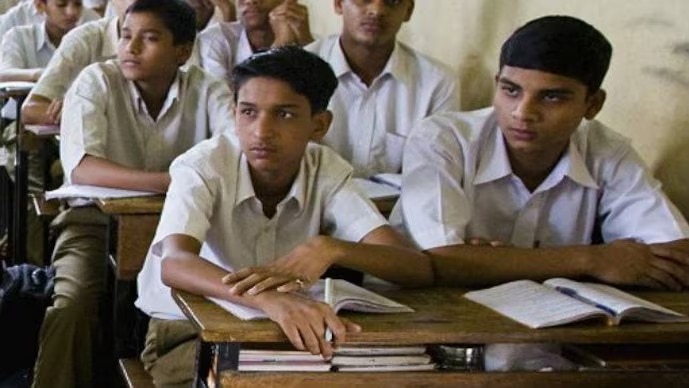
More than 80,000 students failed the Marathi first language paper in the Maharashtra Secondary School Certificate (SSC) examinations this year, raising concerns among education experts about the changing place of regional languages in schools and daily life.
According to the examination data, 10,98,623 students had registered for the Marathi first language paper. Out of these, 10,06,896 students passed, taking the overall pass percentage to 92.57 percent. However, 80,803 students failed the subject.
The numbers have triggered discussion among teachers, educationists and language experts, especially because Marathi is the official language of Maharashtra. Many believe the issue reflects a larger problem within the education system itself.
The concern becomes sharper when viewed in the wider context. Marathi was also taken as a second or third language by 4,13,917 students. Among them, 13,741 students failed. Altogether, around 94,544 students failed Marathi language subjects across categories in the SSC examinations.
Education experts say that when nearly 8 percent students fail the state language examination, it cannot be seen only as an individual academic issue. They argue that the trend points towards changing language habits among students and families.
The debate has also gained attention at a time when Marathi was recently granted the status of a classical language by the Centre. Discussions around preserving regional languages, promoting mother tongues and balancing English-medium education have already been growing across the country.
Several educationists believe urbanisation and the rise of English-medium schools have changed the way students engage with Marathi. In many homes, especially in cities, English and Hindi are increasingly becoming the dominant languages of communication, while reading and writing Marathi is receiving less attention outside classrooms.
Teachers also point to differences in school infrastructure and teaching methods. Some experts say students often treat language subjects as secondary compared to science and mathematics, leading to weaker preparation.
Others argue that the issue is not about students rejecting Marathi, but about how languages are being taught in schools. They say language learning has become more exam-focused and less connected to literature, conversation and culture.
The SSC results have now opened a larger conversation on whether schools, parents and policymakers are doing enough to strengthen regional language learning among younger generations.
– Ends