

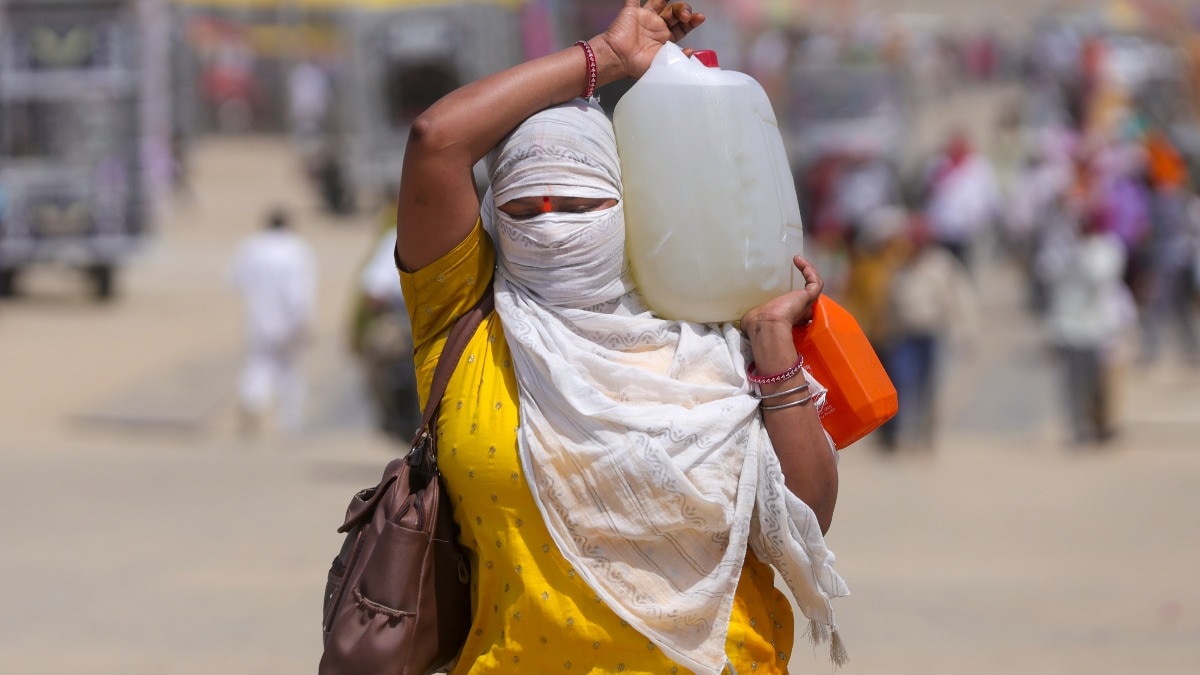
Delhi-NCR is already simmering above 40°C, and the summer has barely begun. Across India, forecasters warn of an unforgiving season ahead. The India Meteorological Department has projected above-normal temperatures and more frequent heatwave days between April and June, with some regions expected to cross 45°C.
East, Central and Northwest India are likely to bear the brunt, as El Nio conditions intensify heat stress across the subcontinent.
Heat, however, is not just a matter of discomfort. It is a slow, complex, and often invisible killer.
To understand how heat kills, it helps to begin with how the body survives it. Humans are built to regulate temperature within a narrow range. Sweating and increased blood flow to the skin are the body’s primary cooling tools. Under moderate conditions, these systems work with quiet efficiency.
But extreme heat changes the equation.
The body’s core temperature, doctors say, is about 37°C and when the temperature goes above 41°C– considered a medical emergency – the body’s internal mechanisms such as profuse sweating and widening blood vessels to regulate this – may not be enough.
“Extremely hot weather can be deadly because it interferes with the body’s mechanism of self-regulation of temperature,” said Dr Tushar Tayal, Associate Director of Internal Medicine at CK Birla Hospital in Gurugram.
He explained that when temperatures soar and humidity rises, sweating becomes less effective. The body loses its ability to cool down.
In recent weeks, hospitals in the region have already reported a 10–15 percent increase in heat-related cases. Most patients arrive with early-stage heat exhaustion – fatigue, dizziness, headaches, and dehydration. These symptoms are warnings. If ignored, they can escalate rapidly.
But the worse, doctors feel, could be yet to come.
“We start seeing patients typically when the maximum temperature reaches 43–44 °C and the nighttime temperature is also high,” said Dr Amlendu Yadav. As the head of the emergency department of Delhi’s RML Hospital, he is also in-charge of the heat-stroke unit, North India’s first such dedicated unit, set up in 2024, at the Central government-run facility.
BODY UNDER SIEGE
The danger lies in how quickly the body’s internal balance can unravel. Under intense heat, blood is redirected toward the skin to release warmth. While this helps cool, it deprives vital organs of adequate circulation.
Dr Tayal described a cascade that follows: excessive sweating drains fluids and electrolytes, weakening cardiovascular function. Blood becomes thicker as dehydration sets in, forcing the heart to work harder. Meanwhile, reduced blood flow to the brain and gut triggers dizziness, nausea, and confusion.
Dr Seema Dhir, a senior internal medicine specialist with Artemins Hospital put it bluntly: “When the body can’t control its temperature any more, heat can be deadly.”
She noted that high humidity worsens the situation by preventing sweat from evaporating. Without evaporation, the body traps heat instead of releasing it. Core temperature rises quickly, pushing organs toward damage.
“When the body temperature goes above 40°C, the brain, heart, and kidneys start to hurt,” she says. The brain, being particularly sensitive, is often the first to show signs – confusion, disorientation, even loss of consciousness.
At this stage, heat is no longer an environmental condition. It becomes a physiological emergency.
Doctors broadly describe three ways in which heat proves fatal: dehydration, cardiac stress, and organ failure. These are not isolated processes but overlapping ones, often unfolding simultaneously.
Dehydration is usually the first step. With continuous sweating, the body loses water and essential salts. Without replenishment, blood volume drops. Circulation slows. Cells begin to starve of oxygen.
The second pathway involves the heart. Thickened blood increases resistance in the circulatory system. The heart strains to maintain flow, particularly in individuals with pre-existing conditions. In extreme cases, this strain can trigger heart attacks.
The third and most severe outcome is organ failure. As circulation falters and temperatures rise, vital organs begin to shut down. The kidneys, responsible for filtering waste, are especially vulnerable. The brain can swell, leading to neurological collapse. The liver, too, can fail under prolonged heat stress.
These processes can unfold faster than many expect. What begins as mild fatigue in the morning can escalate into a life-threatening crisis by afternoon.
INVISIBLE NUMBERS, UNDERSTATED CRISIS
India’s official data on heat-related deaths tells a fragmented story. Between 2000 and 2020, the National Crime Records Bureau recorded over 20,000 deaths due to heatstroke.
The National Disaster Management Authority (NDMA) reported nearly 18,000 heatwave deaths in the same period. Meanwhile, figures from the meteorological department are significantly lower, at just over 10,000.
The discrepancies point to a deeper issue: under-reporting.
Heat rarely appears as the sole cause of death. It exacerbates existing conditions – cardiac disease, respiratory illness, infections – making it harder to attribute fatalities directly to temperature.
As a result, the true toll of heat may be far higher than official records suggest, experts say.
The effects of extreme temperatures extend beyond immediate physiological collapse. Doctors are also observing a rise in secondary illnesses during heatwaves.
High temperatures accelerate bacterial growth in food and water, increasing the risk of gastrointestinal infections. When combined with dehydration, these infections can quickly become severe, especially in children and the elderly.
Dr Tayal noted that hospitals are seeing more cases of foodborne and viral illnesses during heat spikes. The body, already weakened by fluid loss, struggles to fight infections.
This overlap of heat stress and disease creates a dangerous multiplier effect – one that often goes unnoticed in public discourse.
WHO IS MOST AT RISK
While heat affects everyone, it does not do so equally. Outdoor workers, the elderly, children, and those with chronic illnesses face the highest risk. Urban areas like Delhi-NCR amplify the danger through the “heat island” effect, where concrete and asphalt trap heat, keeping temperatures elevated even at night.
Access to cooling, hydration, and healthcare also plays a decisive role. For many, especially in densely populated or economically vulnerable communities, avoiding heat exposure is not an option.
One of the most critical aspects of surviving extreme heat is recognising early symptoms. Excessive sweating, fatigue, headaches, and dizziness are not minor inconveniences. They are signals that the body is struggling.
Dr Dhir emphasised the importance of acting at this stage. Cooling down, rehydrating, and resting in shaded or air-conditioned spaces – for those at least who can access them – can prevent progression to more severe conditions.
“It’s easy but very important to stay healthy in the heat,” she said, stressing simple measures like drinking water, avoiding peak sun hours, and wearing light clothing.
These steps may seem basic, but they can mean the difference between recovery and collapse.
– Ends